Haggis Neeps and Tatties: How to Cook and Serve Scotland's National Dish
- Contents
- What is haggis?
- Ingredients and method for haggis neeps and tatties
- Haggis, Neeps and Tatties with Whisky Sauce
- How to cook haggis
- Making the neeps
- Making the tatties
- A creamy whisky sauce
- Vegetarian and vegan haggis
- Burns Night and St Andrew's Day traditions
- Common mistakes
- Leftover haggis ideas
- Haggis neeps and tatties FAQs
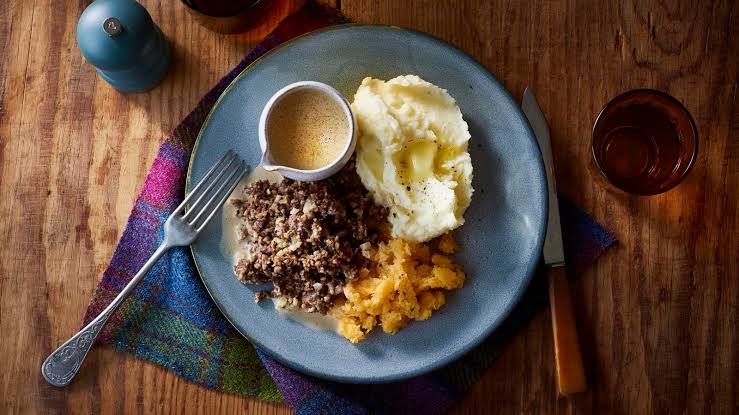
Haggis neeps and tatties is Scotland's national dish: rich, peppery haggis served with mashed swede, called neeps, and mashed potatoes, called tatties. It is the centrepiece of Burns Night suppers on 25 January and a favourite on St Andrew's Day, 30 November, but it is also simply a delicious, warming plate of comfort food on any winter evening.
Cooking haggis is much easier than many people think, because most haggis is sold ready cooked and only needs heating through. This guide explains how to cook haggis neeps and tatties in the oven or on the hob, how to make perfect buttery mashes, and how to make a creamy whisky sauce. For another Scottish classic, see our guide to mince and tatties.
Contents
What is haggis?
Haggis is a savoury pudding made from sheep's offal, traditionally the heart, liver and lungs, minced with onion, oatmeal, suet, spices and plenty of black pepper. The mixture was originally cooked inside a sheep's stomach, although most haggis today uses a natural or synthetic casing. The flavour is rich, earthy and peppery, with a crumbly texture similar to a coarse sausage.
Haggis was immortalised by Robert Burns in his 1786 poem Address to a Haggis, which is still recited at Burns suppers around the world. You can read more on Wikipedia.
Ingredients and method for haggis neeps and tatties
This recipe for haggis neeps and tatties serves four. Buy a good-quality haggis from a butcher or supermarket, about 450g to 500g, or two smaller ones.
Haggis, Neeps and Tatties with Whisky Sauce
Ingredients
Method
- Heat the oven to 180°C (160°C fan). Wrap the haggis tightly in foil, place in a dish with 2cm of water and bake for about 1 hour 15 minutes, until piping hot.
- Boil the swede in salted water for 20 to 25 minutes until very tender. Drain well, steam dry, then mash with 40g butter, black pepper and nutmeg.
- Boil the potatoes for 15 to 20 minutes until tender. Drain, steam dry and mash with the warm milk and 40g butter. Season.
- For the sauce, soften the shallot in the remaining butter, add the whisky and bubble for 1 minute. Add the stock and reduce by half, then stir in the cream and mustard and simmer until thick.
- Open the haggis, spoon it onto plates with the neeps and tatties and pour over the whisky sauce.
Check the packaging of your haggis for cooking times, as they vary by size and brand. Always heat it until piping hot all the way through.
How to cook haggis
There are three main ways to heat a haggis. Remove any outer plastic packaging but keep the casing on during cooking.
In the oven
Wrap the haggis tightly in foil, place it in an ovenproof dish with a little water and bake at 180°C (160°C fan) for about 1 hour 15 minutes for a 450g to 500g haggis. This is the most reliable method and avoids the risk of the casing bursting.
Simmered on the hob
Wrap the haggis in foil, place it in a pan of water and bring to a gentle simmer. Cook for about 45 minutes per 450g. Never let the water boil hard, or the casing may split.
In the microwave
Remove the casing, slice or crumble the haggis into a microwave-safe bowl, cover and heat on high for 5 to 6 minutes, stirring halfway. This is quick but less traditional.
Making the neeps
In Scotland, neeps are swede, the large root vegetable with purple and cream skin and orange flesh, which the Scots also call turnip. Peel it thickly, cut it into even chunks and boil for 20 to 25 minutes until very tender. Drain well and leave it to steam dry for a few minutes, as swede holds a lot of water. Mash with plenty of butter, black pepper and a pinch of nutmeg or ground allspice.
Making the tatties
For fluffy tatties, choose a floury potato such as Maris Piper, King Edward or Golden Wonder, a traditional Scottish variety. Boil until tender, drain and steam dry, then mash with warm milk and butter until smooth. Some families mash the neeps and tatties together, which is called clapshot in Orkney, and it is delicious with chives.
A creamy whisky sauce
A whisky sauce is not essential, but it makes a plate of haggis neeps and tatties feel special. Soften a chopped shallot in butter, add a splash of Scotch whisky and let it bubble for a minute, then pour in beef or chicken stock and reduce by half. Stir in double cream and a teaspoon of wholegrain mustard and simmer until thick and glossy. A rich gravy is a good alternative if you prefer.
Vegetarian and vegan haggis
Vegetarian haggis, made with oats, lentils, beans, nuts, vegetables and spices, is widely available and very popular in Scotland. Cook it the same way as meat haggis, following the packet instructions. Many vegetarian versions are also vegan, so check the label. Use plant-based butter and milk in the mashes and a vegetable stock in the sauce for a fully vegan plate of haggis neeps and tatties.
Burns Night and St Andrew's Day traditions
At a formal Burns supper, the haggis is carried into the room to the sound of the bagpipes, and a guest recites Address to a Haggis before cutting it open with a flourish. Guests then raise a toast to the haggis with a glass of whisky. St Andrew's Day celebrations are usually less formal, with Scottish food, music and dancing, known as a ceilidh.
Even if you are not planning a full celebration, haggis neeps and tatties is a fun way to mark either occasion at home.
Common mistakes
Avoid these when cooking haggis neeps and tatties.
- Burst haggis: the water was boiling. Keep it at a gentle simmer or use the oven.
- Watery neeps: the swede was not drained and dried well before mashing.
- Gluey tatties: the potatoes were overworked or a waxy variety was used.
- Lukewarm haggis: check that it is piping hot right through to the centre.
Leftover haggis ideas
Leftover haggis is very versatile. Fry slices until crisp for breakfast with eggs, stuff it into chicken breasts for the classic Scottish dish known as chicken Balmoral, or crumble it into a pasta sauce or a toastie. Leftover neeps and tatties make excellent potato cakes, fried until golden.
Haggis neeps and tatties FAQs
Is haggis already cooked when you buy it?
Yes. Most shop-bought haggis is fully cooked and only needs heating thoroughly before serving.
What are neeps?
Neeps are swede, a root vegetable that is called turnip in Scotland.
How long does a 450g haggis take in the oven?
About 1 hour 15 minutes at 180°C (160°C fan), wrapped in foil.
What drink goes with haggis neeps and tatties?
A single malt Scotch whisky is traditional, or try a Scottish ale or a robust red wine.
Can I freeze haggis?
Yes. Uncooked haggis freezes well for up to three months. Defrost it fully in the fridge before cooking.
Haggis neeps and tatties is simple, hearty and full of tradition. Heat the haggis gently, butter the mashes generously and raise a glass to Scotland.
Leave a Reply