Creamy vs Tomato Prawn Linguine: Which Version Should You Make?
- The Two Styles at a Glance
- The Full Comparison
- When to Choose Each — A Practical Decision Guide
- The Technique Differences That Matter
- The Creamy Prawn Linguine Recipe
- The Tomato Prawn Linguine Recipe
- The Middle Ground: Rosé Sauce Prawn Linguine
- Wine Pairings: Side by Side
-
Frequently Asked Questions
- What is the difference between creamy and tomato prawn linguine?
- Which prawn linguine is better — creamy or tomato?
- Can you make prawn linguine without cream?
- What wine should you use to cook prawn linguine?
- Is creamy prawn linguine heavy?
- What is rosé sauce for prawn linguine?
- Can you reheat prawn linguine?
It is, on the face of it, a simple choice: creamy or tomato? But anyone who has stood in the kitchen with a bag of king prawns and a packet of linguine knows that the decision is more loaded than it appears. These are not two versions of the same dish. They are two completely different dishes that happen to share a protein and a pasta shape — and choosing between them well, for the right occasion, with the right sides and the right wine, makes the difference between a good dinner and a great one.
Both styles have loyal advocates. Creamy prawn linguine — rich, glossy, indulgent — has a lactic depth that makes it feel like special-occasion food even on a Tuesday evening. Tomato prawn linguine — bright, acidic, and light — feels like summer in a bowl, allowing the natural sweetness of good king prawns to be the undisputed star of the plate.
This guide compares both in full: flavour profile, richness, technique differences, when each is the right call, wine pairings, and the middle-ground option that deserves more attention than it usually gets. Both complete recipes are included.
The Two Styles at a Glance
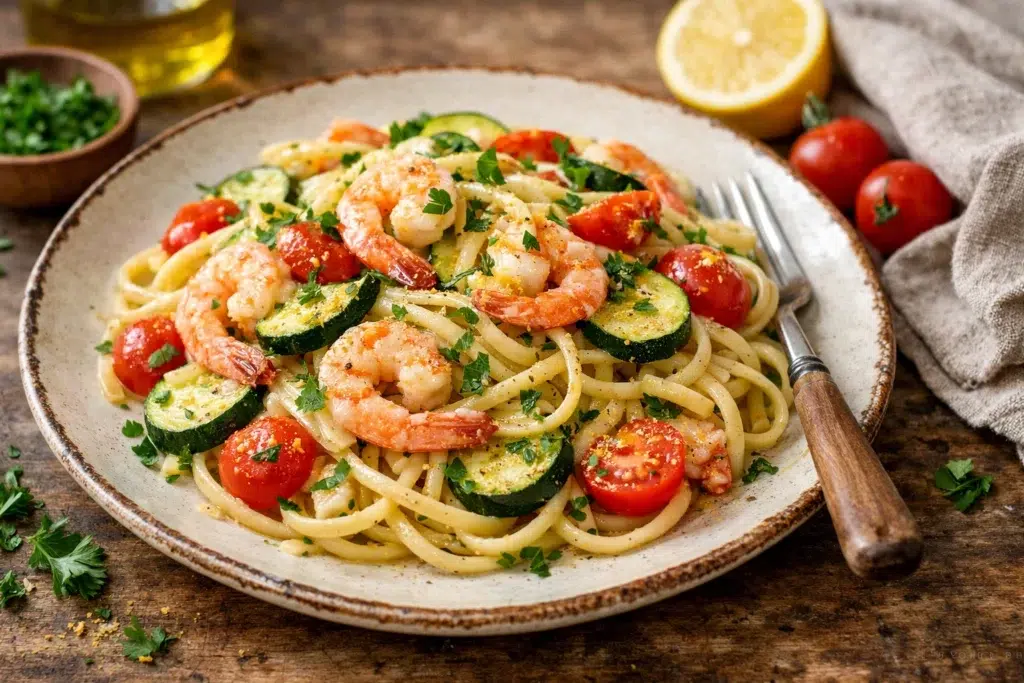
A rich, pale, unctuous sauce built on cream reduced with white wine and garlic. The cream acts as a buffer between the prawn's sweetness and the wine's acidity, producing a rounded, smooth result that coats every strand of linguine generously. Parmesan deepens the savouriness; a pinch of chilli adds contrast.
- Rich, lactic, full-bodied
- Prawn flavour integrated into sauce
- Best in autumn and winter
- Better for dinner parties
- Pairs with oaked Chardonnay
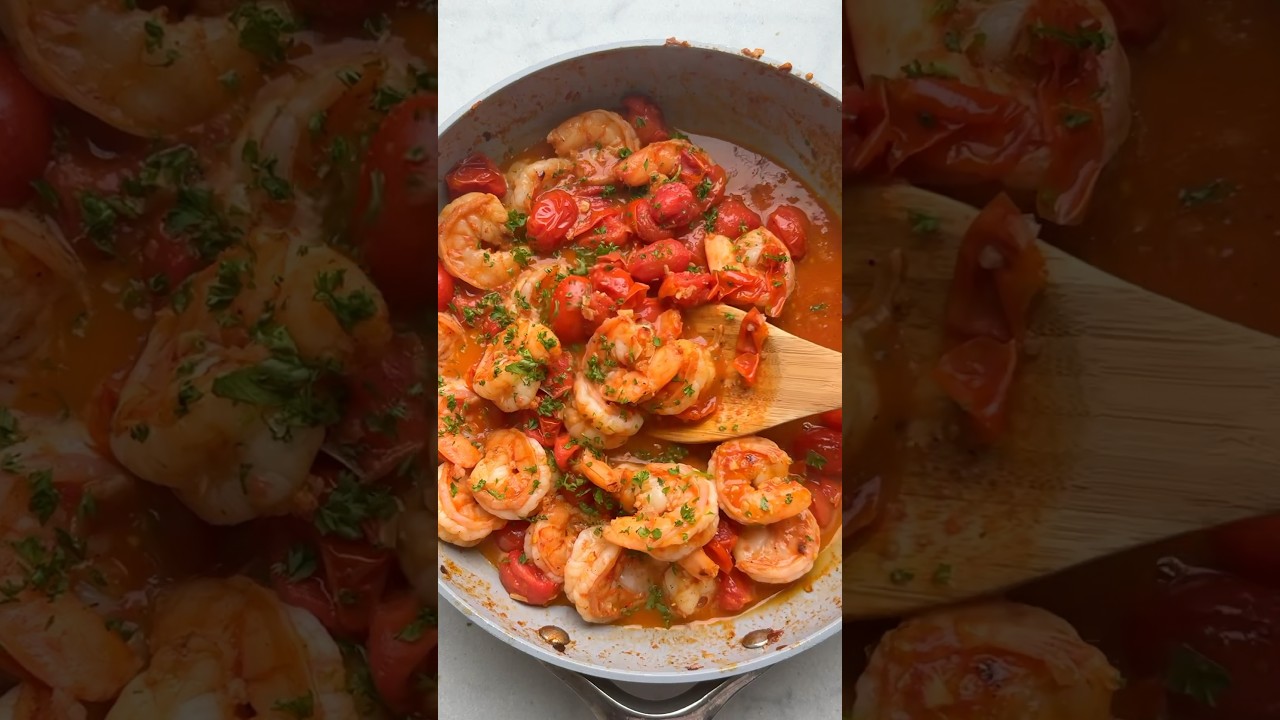
A bright, thin, olive oil-based sauce built on burst cherry tomatoes, white wine, and garlic. The tomato's acidity keeps the sauce light and clean; the prawns sit in it rather than being buffered by it, so their natural sweetness is more forward and direct. Pasta water provides the body that makes the sauce cling.
- Bright, acidic, aromatic
- Prawn flavour prominently forward
- Best in spring and summer
- Better for casual, everyday
- Pairs with Vermentino or Gavi
The Full Comparison
Every meaningful difference between the two styles, laid out side by side. This is the table that makes the choice clear.
| Dimension | Creamy | Tomato |
|---|---|---|
| Sauce base | Double cream or crème fraîche reduced with white wine | Cherry tomatoes burst in olive oil with white wine |
| Colour | Pale ivory to pale gold | Deep red to coral-orange |
| Richness | High — cream and Parmesan make this a genuinely indulgent dish | Low to medium — olive oil and pasta water keep it relatively light |
| Prawn flavour | Integrated and softened — cream acts as a buffer | Forward and clean — the prawn is the star |
| Acidity | Low — cream buffers the wine's acidity | High — tomato and wine both contribute |
| Best season | Autumn and winter | Spring and summer |
| Best occasion | Dinner party · Date night · Special weeknight | Casual weeknight · Summer lunch · Al fresco |
| Wine pairing | White Burgundy · Oaked Chardonnay · White Rioja | Vermentino · Gavi · Sauvignon Blanc · Dry rosé |
| Best sides | Radicchio salad · Tenderstem broccoli with chilli · Ciabatta | Fennel and orange salad · Wilted spinach · Focaccia |
| Calorie range | ~700–800 kcal per portion | ~450–550 kcal per portion |
| Leftovers | Reheats reasonably well with a splash of cream | Sauce can dry out on reheating — add olive oil and pasta water |
| Can you make ahead? | Sauce yes, pasta no — assemble at service | Sauce yes, pasta no — assemble at service |
| Italian precedent | Less traditional — cream in pasta is Northern Italian at most | Directly rooted in Southern Italian (Sicilian, Neapolitan) tradition |
When to Choose Each — A Practical Decision Guide
- It is autumn or winter and you want something warming and indulgent
- You are cooking for a dinner party and want to impress
- You are using smaller, less sweet prawns that benefit from a richer backdrop
- You have a good bottle of oaked Chardonnay or white Burgundy open
- The occasion calls for comfort over lightness
- You want something that feels luxurious on a budget
- It is spring or summer and fresh cherry tomatoes are at their best
- You want the natural sweetness of king prawns to be the star
- You are watching calories or want a lighter meal
- You have a dry Vermentino, Gavi, or rosé chilled and waiting
- You want something that looks and feels authentically Italian
- You are serving it at a casual, relaxed gathering
The Technique Differences That Matter
Both recipes share the same prawn cooking principle — sear in a hot pan, remove before the sauce is built, return at the very end — but the sauce-building technique diverges significantly, and understanding why makes both dishes better.
Creamy: Reduction Is Everything
The quality of a creamy prawn linguine lives or dies on the reduction of the white wine before the cream goes in. Wine that has not reduced sufficiently makes the sauce thin, sour, and alcoholic — nothing like the silky, balanced result you are after. The wine must simmer until almost completely evaporated before cream is added; typically 3–4 minutes over medium-high heat. Similarly, the cream must reduce by roughly one third after it goes in before the pasta joins it. Rushing either reduction step is the most common reason creamy prawn linguines disappoint.
The other key difference: crème fraîche is the more forgiving choice over double cream for home cooks. It is less likely to split if the heat is slightly too high, it has a natural tanginess that prevents the sauce from feeling cloying, and it produces a marginally lighter result. Double cream gives a richer, glossier sauce — the choice is a matter of preference and confidence.
Tomato: Heat and Timing
Tomato prawn linguine requires higher heat during the tomato stage than most recipes suggest. The cherry tomatoes need to cook over medium-high heat until they genuinely collapse and release their liquid — around 4–5 minutes rather than the 2 minutes most recipes specify. Undercooked tomatoes produce a sauce that tastes raw and vegetal rather than sweet and complex. Adding the white wine once the tomatoes have burst allows it to deglaze the pan and reduce simultaneously with the tomato liquid, concentrating both flavours together.
Pasta water is structural in the tomato version in a way it is not in the creamy — add it generously and toss vigorously. The starch in the pasta water is what transforms a thin, oily liquid into a light sauce that clings to each strand of linguine.
The Creamy Prawn Linguine Recipe
- 400g linguine
- 500g raw king prawns, peeled and deveined
- 2 tbsp olive oil + 1 tbsp unsalted butter
- 4 garlic cloves, finely sliced
- 1–2 red chillies, deseeded and finely chopped
- 150ml dry white wine
- 200ml double cream (or 250ml crème fraîche)
- 50g Parmesan, finely grated
- Juice of ½ lemon
- Small bunch flat-leaf parsley, roughly chopped
- Flaky sea salt and white pepper
- Cook pasta in well-salted boiling water until 1 minute short of al dente. Reserve a large mug of pasta water. Drain.
- Pat prawns very dry. Heat oil and butter in a wide pan over high heat. Sear prawns for 60 seconds per side until golden and just turning pink. Remove and set aside.
- Reduce heat to medium. In the same pan, cook garlic and chilli for 2 minutes until softened but not coloured.
- Pour in white wine. Simmer over medium-high heat for 3–4 minutes until almost completely evaporated.
- Add cream. Simmer for 3–4 minutes, stirring, until reduced by one third and coating a spoon. Season generously.
- Add pasta to the sauce. Toss over medium heat for 60 seconds, splashing in pasta water until sauce coats every strand. Stir in Parmesan.
- Remove from heat. Return prawns, fold in gently, and rest for 60 seconds. Squeeze over lemon, scatter parsley, and serve immediately.
The Tomato Prawn Linguine Recipe
- 400g linguine
- 500g raw king prawns, peeled and deveined
- 4 tbsp good-quality olive oil, divided
- 4 garlic cloves, finely sliced
- 1–2 red chillies, finely sliced
- 400g cherry tomatoes, halved
- 150ml dry white wine
- 1 tsp red wine vinegar
- Pinch of caster sugar
- Zest and juice of ½ lemon
- Large bunch of fresh basil
- Flaky sea salt and black pepper
- Cook pasta in well-salted boiling water until 1 minute short of al dente. Reserve a large mug of pasta water. Drain.
- Pat prawns very dry. Heat 2 tbsp oil in a wide pan over high heat. Sear prawns 60 seconds per side until golden. Remove and set aside.
- Reduce heat to medium. Add remaining 2 tbsp oil, garlic, and chilli. Cook 2 minutes until fragrant.
- Add cherry tomatoes. Cook over medium-high heat for 4–5 minutes, pressing with a spoon, until fully collapsed and jammy. Add sugar and vinegar.
- Pour in white wine. Simmer 3 minutes until reduced and sauce thickens slightly.
- Add pasta. Toss over medium heat, adding pasta water generously until sauce is glossy and clings to the linguine. Season well.
- Remove from heat. Fold in prawns, lemon zest, and torn basil. Rest 60 seconds. Squeeze over lemon juice and serve immediately.
The Middle Ground: Rosé Sauce Prawn Linguine
There is a third option that does not get nearly enough attention in UK food writing: the rosé sauce (sometimes called salsa rosa in Italian cooking), which combines tomato and cream in a single sauce that takes the best of both styles.
The technique is straightforward: build the tomato sauce as in Recipe 2, allow it to simmer and concentrate for an extra 2 minutes, then stir in 100ml of crème fraîche or a modest 80ml of double cream over low heat. The result is a pale coral-pink sauce — visually beautiful, flavour-wise complex — that has the brightness of tomato, the body of cream, and a rounded depth that neither sauce alone can achieve.
The rosé sauce works particularly well when:
- You want something richer than a pure tomato version but lighter than a full creamy one
- The tomatoes are not at their best and need the cream to round off any sharpness
- You are cooking for guests with mixed preferences — it satisfies both camps simultaneously
- You want a sauce that photographs beautifully — the coral-pink colour against the pale linguine is genuinely striking
Use the same wine pairing approach as the tomato version — the tomato's acidity is still present and drives the pairing need. A dry Provençal rosé alongside is, naturally, the obvious choice and works brilliantly.
Wine Pairings: Side by Side
The wine pairing diverges more significantly between the two styles than most people expect — and getting it right improves both the food and the glass considerably.
For creamy prawn linguine: the sauce's richness and lactic depth demand a wine with enough body and texture to match. A lightly oaked Chardonnay — particularly white Burgundy (Mâcon-Villages for everyday, Meursault for a special occasion) — is the benchmark pairing. The wine's textural weight mirrors the cream; the oak adds a subtle complementary note. White Rioja, which blends oak-aged Viura with richness, is an underrated and often excellent-value alternative. For a celebratory occasion, a blanc de blancs Champagne has the acidity to cut through the cream and the weight to match the richness. See our guide to the world's finest sparkling wines for specific recommendations.
For tomato prawn linguine: the sauce's acidity demands a wine with matching or higher acidity — a flat, low-acid white will taste flabby against it. Vermentino from Sardinia — herbal, saline, slightly bitter — is instinctively right with tomato and seafood. Gavi di Gavi (Cortese grape, Piedmont) has an elegant, almond-edged dryness that pairs beautifully. A well-chilled dry Provençal rosé is perhaps the most pleasurable and versatile option, particularly in summer. Sauvignon Blanc works well if nothing more specifically Italian is available.
For a complete guide to sides matched to each sauce style — including salad, bread, and starter recommendations — see our article on what to serve with prawn linguine.
Frequently Asked Questions
What is the difference between creamy and tomato prawn linguine?
Creamy prawn linguine uses double cream or crème fraîche reduced with white wine as the sauce base, producing a rich, pale, unctuous coating where the prawn flavour is integrated and softened. Tomato prawn linguine uses cherry tomatoes, olive oil, and white wine, producing a lighter, brighter, more acidic sauce where the prawn's natural sweetness is more forward. They are fundamentally different dishes that suit different seasons, occasions, and wine pairings.
Which prawn linguine is better — creamy or tomato?
Neither is objectively better — they are different dishes for different moments. Creamy is richer and more indulgent, better for autumn and winter and dinner party occasions. Tomato is brighter and lighter, better for summer, when you want the prawn to lead, or when you want something closer to the traditional Southern Italian original. The best answer is to be able to make both confidently and choose based on season and mood.
Can you make prawn linguine without cream?
Yes — tomato-based prawn linguine uses no cream at all and is equally delicious. The sauce is built from olive oil, garlic, cherry tomatoes, and white wine, with starchy pasta water providing the body. A garlic butter prawn linguine is another cream-free option — cold butter emulsified with pasta water creates a glossy coating with no cream involved. Crème fraîche is also a lighter, less rich alternative to double cream in the creamy version.
What wine should you use to cook prawn linguine?
For cooking, always use a dry white wine you would also drink — Pinot Grigio, Vermentino, or a basic Sauvignon Blanc are all good choices. Avoid anything labelled "cooking wine" — the quality is generally poor and the flavour will be evident in the finished sauce. Around 150ml of wine per recipe is the standard quantity; it should reduce almost completely before cream (in the creamy version) or tomatoes and pasta water (in the tomato version) are added.
Is creamy prawn linguine heavy?
It can be, depending on the quantity of cream and portion size. Using crème fraîche instead of double cream reduces richness without sacrificing the sauce's character. Ensuring the sauce is properly reduced and well-seasoned — particularly with enough lemon and black pepper — prevents it from feeling cloying. Serving with a bitter green salad (rocket, radicchio) alongside cuts the richness effectively and is always recommended.
What is rosé sauce for prawn linguine?
A rosé sauce is a hybrid of tomato and cream — built by stirring a modest quantity of cream or crème fraîche into a concentrated tomato sauce. The result is a pale coral-pink sauce with the brightness of tomato, the body of cream, and a complexity neither sauce alone achieves. It is an excellent middle-ground option when you want something richer than a pure tomato version but lighter than a full creamy one, and works particularly well when the tomatoes are not at their seasonal peak.
Can you reheat prawn linguine?
Prawn linguine is best eaten immediately — prawns toughen quickly on reheating and the pasta continues to absorb sauce overnight. If reheating is necessary, do so gently in a pan over low heat with a splash of water, warming for no more than 2 minutes. Creamy versions can separate; stir in a splash of cream or pasta water vigorously to bring the sauce back together. Tomato versions dry out more easily — add a generous splash of olive oil and pasta water and toss well.
Leave a Reply