Slow Cooker Lamb Shank: The Complete Guide to Melt-in-the-Mouth Results
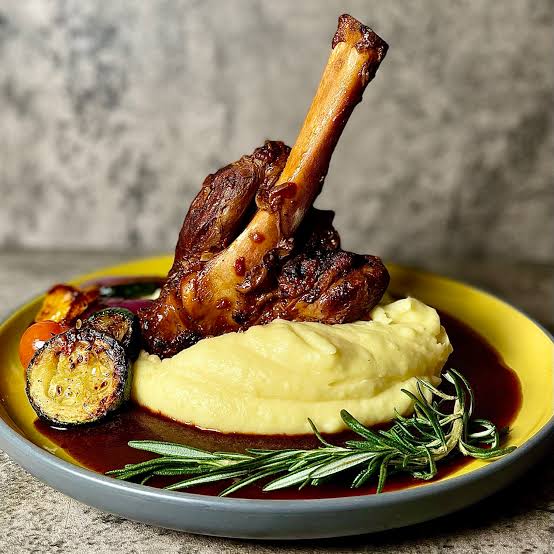
Lamb shank has a reputation as a restaurant-only dish, the kind of thing that looks impressive on a plate but seems complicated to attempt at home. In a slow cooker, it's genuinely one of the easiest things you can make: the shank's natural toughness, which would ruin a quick-cooked cut, becomes exactly the quality that makes hours of gentle heat turn it meltingly tender.
Why lamb shank suits slow cooking so well
The shank is the lower leg of the lamb, a heavily worked muscle with a substantial amount of connective tissue and a bone running through the centre that adds flavour and body to the cooking liquid as it braises. Cooked quickly, this cut is tough and chewy almost without exception; cooked low and slow, the connective tissue breaks down into gelatine, and the meat becomes so tender it separates from the bone with barely any pressure.
Ingredients (serves 4)
- 4 lamb shanks
- 2 tbsp plain flour, seasoned
- 2 tbsp olive oil
- 1 onion, chopped
- 2 carrots, chopped
- 3 garlic cloves, crushed
- 400ml lamb or beef stock
- 150ml red wine (optional, or extra stock)
- 2 tbsp tomato purée
- 2 sprigs fresh rosemary
- 2 bay leaves
- 1 tbsp redcurrant jelly or a little sugar (optional, balances acidity)
- Salt and black pepper
Method
1. Brown the shanks
Toss the lamb shanks in the seasoned flour. Heat the oil in a large frying pan and brown the shanks on all sides over high heat, working in batches if needed so they colour properly rather than steam. Transfer to the slow cooker.
2. Build the base
In the same pan, cook the onion and carrots for 5-6 minutes until starting to soften, then add the garlic and tomato purée and cook for 1 minute more. Add this to the slow cooker with the browned shanks.
3. Add the liquid
Pour in the stock and red wine if using, then add the rosemary, bay leaves, and redcurrant jelly if using. The liquid should come roughly halfway up the shanks, not fully submerge them.
4. Cook low and slow
Cover and cook on low for 7-8 hours, until the meat is completely tender and pulling away from the bone easily.
5. Finish the sauce
Remove the shanks and keep warm. If the sauce is thinner than you'd like, transfer it to a pan and simmer uncovered for 10-15 minutes to reduce and concentrate the flavour, then season to taste before serving over the shanks.
Slow Cooker Lamb Shank
Ingredients
Method
- Toss the shanks in seasoned flour and brown on all sides in hot oil. Transfer to the slow cooker.
- Cook the onion and carrots for 5-6 minutes, add garlic and tomato purée, cook 1 minute more. Add to the slow cooker.
- Pour in the stock and wine, add rosemary, bay leaves and redcurrant jelly.
- Cover and cook on low for 7-8 hours until the meat is tender and pulling from the bone.
- Remove the shanks, reduce the sauce uncovered for 10-15 minutes if needed, and serve over the shanks.
Troubleshooting: why is my lamb still tough after the recommended time?
As with other tough braising cuts, this almost always means more time is needed rather than less — slow cookers vary in actual temperature, and shanks that seem tough at the 7-hour mark will often be perfect with another hour or two; the meat should offer almost no resistance and separate easily from the bone when properly done.
Variations
A Mediterranean-leaning version swaps rosemary for oregano, adds a tin of chopped tomatoes, and finishes with olives and a little lemon zest. For a Middle Eastern twist, use cumin, cinnamon and dried apricots in place of the classic red wine and rosemary base.
Make ahead, storing and freezing
Lamb shanks, like most slow braises, taste even better the next day. Make up to 2 days ahead and reheat gently, or freeze the cooked shanks in their sauce for up to 3 months — thaw fully before reheating to avoid the meat drying out or the sauce splitting.
Serving suggestions
Creamy mashed potato is the classic pairing, ideal for soaking up the rich sauce, though soft polenta or crushed new potatoes both work well too. A green vegetable like buttered kale or braised cabbage rounds out the plate.
For more background, see lamb and mutton on Wikipedia. If you enjoyed this recipe, you might also like our mutton chops guide.
Frequently asked questions
Can I cook lamb shanks without any alcohol?
Yes — simply replace the red wine with extra stock; the dish will be slightly less complex in flavour but still rich and satisfying.
Do I need to brown the shanks before slow cooking?
It's not strictly essential for safety, but browning develops a depth of flavour through caramelisation that a shank added raw to the slow cooker simply won't have, and it's a worthwhile extra 10 minutes.
Can I cook lamb shanks on high instead of low to save time?
You can, roughly 4-5 hours on high instead of 7-8 on low, though low and slow generally gives a more consistently tender result for this particular cut.
Lamb shank is proof that some of the most impressive-looking dishes are also some of the easiest, once you let time and low heat do the difficult part for you.
Leave a Reply