Porridge Recipe: How to Make Creamy Porridge Every Time

- Contents
- What makes a good porridge recipe?
- A short history of porridge
- Ingredients and method for the perfect porridge recipe
- Creamy Porridge
- Choosing the right oats
- Hob, microwave or overnight: which method?
- Porridge problems and how to fix them
- Porridge recipe topping ideas
- Storing and reheating porridge
- Porridge recipe FAQs
A reliable porridge recipe is one of the most useful things you can have in your repertoire. It costs pennies, takes about ten minutes and keeps you full until lunch. Yet porridge can also turn out gluey, lumpy or bland if the ratio is wrong or the oats are rushed.
This guide explains the right proportions of oats to liquid, the difference between making porridge on the hob, in the microwave and overnight, and the small details that make it creamy rather than stodgy. If you enjoy comforting oat-based bakes, our flapjack recipe makes a good companion.
Contents
What makes a good porridge recipe?
Porridge is simply oats cooked in liquid until the starch swells and thickens. The quality of the result depends on three things: the type of oats, the ratio of oats to liquid and how long and how gently you cook it.
A good bowl should be creamy and spoonable, neither runny nor set like cement. It should also taste of oats, which means a pinch of salt is not optional. Salt does not make porridge salty; it brings out the natural nutty sweetness of the grain.
A short history of porridge
Porridge is one of the oldest cooked cereal dishes in northern Europe. Oats grow well in cool, damp climates, so they became a staple in Scotland and northern England, where wheat was harder to farm. Traditional Scottish porridge is made with oatmeal, water and salt, and stirred with a wooden stick called a spurtle.
Today the dish is still taken very seriously: Carrbridge in the Highlands hosts an annual World Porridge Making Championship, where competitors compete for the Golden Spurtle. You can read more about porridge around the world on Wikipedia.
Ingredients and method for the perfect porridge recipe
This recipe makes two generous bowls on the hob. It uses a mix of milk and water, which gives creaminess without making the porridge heavy.
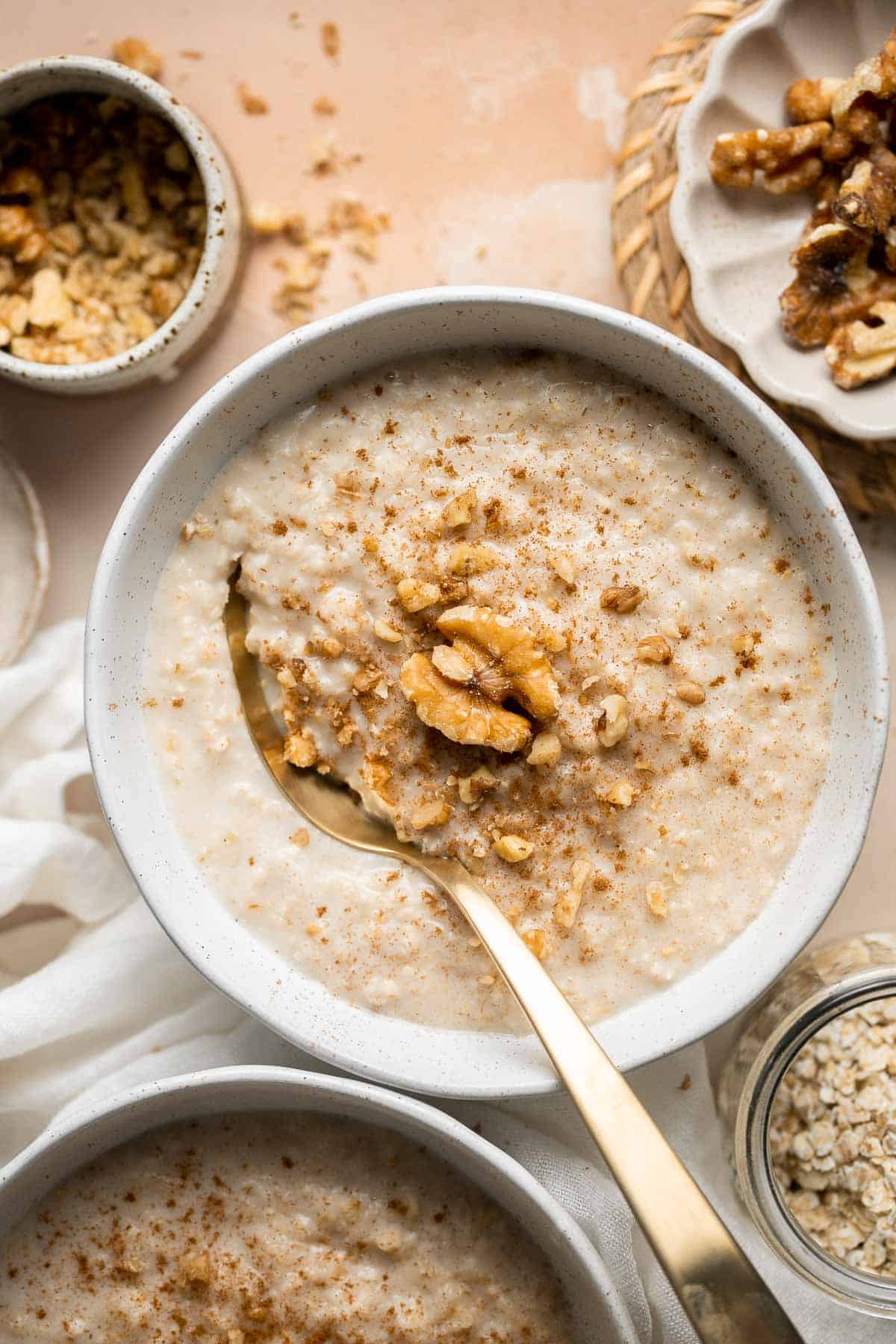
Creamy Porridge
Ingredients
Method
- Put the oats, milk, water and salt in a medium saucepan and stir.
- Bring gently to the boil over a medium heat, stirring often.
- Reduce the heat and simmer for 4 to 5 minutes, stirring, until the porridge is thick and creamy.
- Take off the heat and leave to stand for 1 minute. Add a splash of hot milk if it is too thick.
- Divide between two bowls and add your chosen toppings.
The recipe card gives the exact quantities. As a rule of thumb, use one part rolled oats to five parts liquid by volume for a loose, creamy bowl, and one to four if you like it thicker.
This porridge recipe scales easily. Use 50g of oats and 250ml of liquid for a single bowl, or double everything for four people and cook it in a larger pan, allowing a minute or two longer. Keep the ratio the same and the texture stays consistent whatever the quantity.
Choosing the right oats
The oats you pick change the texture more than anything else, so it is worth knowing the differences.
- Rolled oats (porridge oats) cook in five minutes and give a soft, creamy bowl. They are the best all-rounder.
- Jumbo oats are thicker flakes that keep more bite and take slightly longer to cook.
- Pinhead or steel-cut oats are chopped whole grains. They need 20 to 30 minutes but give a chewy, nutty porridge.
- Instant oats are finely cut and cook fastest, but they can turn pasty.
Hob, microwave or overnight: which method?
All three methods work. The best one depends on how much time you have.
On the hob
The hob gives the creamiest result. Stir the oats, liquid and salt over a medium heat, bring gently to a simmer and cook for four to five minutes, stirring often so nothing catches on the bottom.
In the microwave
Put the oats, liquid and salt in a large bowl, because porridge rises as it cooks. Microwave for two minutes, stir, then cook for a further minute or two. Let it sit for a minute before eating.
Overnight
Stir the oats into cold milk or yoghurt, cover and chill overnight. In the morning you can eat it cold or warm it through. The texture is thicker and chewier than hob porridge.
Porridge problems and how to fix them
Porridge is forgiving, and most problems have a simple fix.
- Lumpy: add the oats to cold liquid before heating, then stir as it warms.
- Too thick: stir in a splash of hot milk or water until it loosens.
- Too thin: simmer for another minute or two, or stir in a spoonful of extra oats and let it stand.
- Bland: add a pinch more salt, and top with something sweet or fruity.
- Stuck to the pan: soak the pan in hot water straight away and use a wooden spoon or spurtle to scrape the base while cooking.
Porridge recipe topping ideas
A plain bowl is a blank canvas. Add a topping that gives sweetness, crunch or freshness.
- Honey, maple syrup or brown sugar with a little cinnamon.
- Sliced banana with a spoonful of peanut butter.
- Fresh or frozen berries warmed in a pan with a splash of water.
- Stewed apple or pear with a pinch of mixed spice.
- Chopped nuts, toasted seeds and a swirl of natural yoghurt.
Storing and reheating porridge
Leftover porridge keeps in the fridge for up to three days in a covered container. It sets firmly as it cools, so loosen it with a splash of milk or water when you reheat it, either in a pan over a low heat or in the microwave in short bursts. You can also cook a larger batch and portion it into the fridge for quick weekday breakfasts.
If you enjoy this porridge recipe as a weekday habit, cook a double batch on Sunday night and keep it covered in the fridge, then reheat single portions through the week with a splash of milk.
Porridge recipe FAQs
Should I use milk or water?
Both work. Water gives a cleaner oat flavour, milk gives a creamier bowl and a mix of the two is a good middle ground. Plant-based milks also work well.
Do I need to add salt?
A small pinch makes a noticeable difference. It sharpens the natural flavour of the oats, so the porridge tastes less flat.
How much porridge oats per person?
About 40 to 50g of oats per person is a generous bowl, cooked in 250 to 300ml of liquid.
Can I make porridge ahead?
Yes. Cook a batch, cool it quickly and refrigerate it. Reheat it with a little extra liquid, or make overnight oats if you prefer to eat it cold.
Is porridge good for you?
Oats are a source of fibre, including beta-glucan, and porridge is generally filling. How healthy a bowl is depends largely on the toppings and any sugar you add.
Once you know the ratio, this porridge recipe takes no effort at all. Start with the basic bowl, then experiment with toppings until you find your favourite combination.
Leave a Reply