Beef Curry: The Complete Guide to Regional Styles and a Classic Recipe

- What Is Beef Curry?
- A Short History: How Curry Became a British Staple
- Choosing the Right Cut of Beef
- Regional Styles at a Glance
- Classic Beef Curry
- Slow Cooker and Pressure Cooker Adaptations
- Troubleshooting
- Make Ahead, Storing and Freezing
- What to Serve With Beef Curry
- Frequently Asked Questions
- Classic Beef Curry
Beef curry means something different everywhere it's cooked - mild and sweet in Japan, coconut-rich in Kerala, fiery and herbal in Thailand, deep and spiced in a British curry house. This guide covers how those regional styles differ, the technique that actually makes slow-cooked beef curry work, and a full classic recipe you can build any of those variations from.
What Is Beef Curry?
At its core, beef curry is beef simmered slowly in a spiced sauce until the meat is fork-tender and the sauce has thickened and taken on the flavour of the spices, aromatics and liquid it was cooked in. The specifics - which spices, what the sauce is built from, how long it cooks - are where the world's regional styles diverge sharply, but the underlying technique of long, gentle cooking to break down tough cuts of beef is shared by almost all of them.
A Short History: How Curry Became a British Staple
Curry's presence in British cooking dates back to the East India Company era, when returning colonial officials brought a taste for spiced dishes home with them - the first known curry recipe in an English cookbook appeared in Hannah Glasse's 1747 The Art of Cookery, decades before the more famous "curry houses" existed. The dish that most Britons now think of as classic curry-house curry - a thick, richly spiced gravy served with rice or naan - developed through the 20th century as South Asian immigrant communities, particularly from Bangladesh, opened restaurants across the UK and adapted recipes to local tastes and available ingredients. Beef curry specifically became a British staple alongside lamb and chicken versions, prized for how well tougher, cheaper cuts respond to the long simmer the dish demands.
Choosing the Right Cut of Beef
Curry is a long, slow-cooked dish, and the cuts that work best are the opposite of what you'd want for a quick-fried steak.
- Chuck and shin are the standard choices - well-marbled with connective tissue that breaks down into gelatine over a long simmer, turning genuinely tender rather than just cooked through.
- Brisket works well too, though it benefits from an even longer, gentler simmer than chuck.
- Leaner, quicker cuts like sirloin or flank are better suited to fast pressure-cooker versions, where there isn't time for tough connective tissue to break down - they'll turn dry and chewy in a long slow simmer instead of tender.
Regional Styles at a Glance
Japanese Beef Curry - Mild and Sweet
Japanese curry is noticeably milder and sweeter than its South and Southeast Asian relatives, built on a pre-made curry roux block - a mix of curry powder, flour and fat - that melts into the sauce for a thick, velvety texture. Honey or grated apple add sweetness, while soy sauce and Worcestershire sauce contribute a savoury depth. It's typically served with potatoes and carrots cooked directly in the sauce, alongside rice.
Kerala Beef Curry - Coconut and Curry Leaves
Beef is far less common across most of India than lamb, chicken or vegetarian dishes, but it's a genuine staple in Kerala, on India's southwest coast. Kerala beef curry leans on coconut oil, fresh curry leaves, and a distinctive spice blend of fennel, black pepper, cinnamon and cloves, finished with coconut milk for richness. It's traditionally served with appams (fermented rice pancakes) or parathas rather than plain rice.
Thai Beef Curry - Curry Paste and Coconut Milk
Thai beef curry is built from a fresh or shop-bought curry paste - red, green or massaman are the most common - fried in coconut cream before the beef and remaining coconut milk are added. The result balances sweet, salty, sour and spicy notes far more deliberately than most other styles, often with fish sauce, palm sugar and lime leaves doing the balancing work.
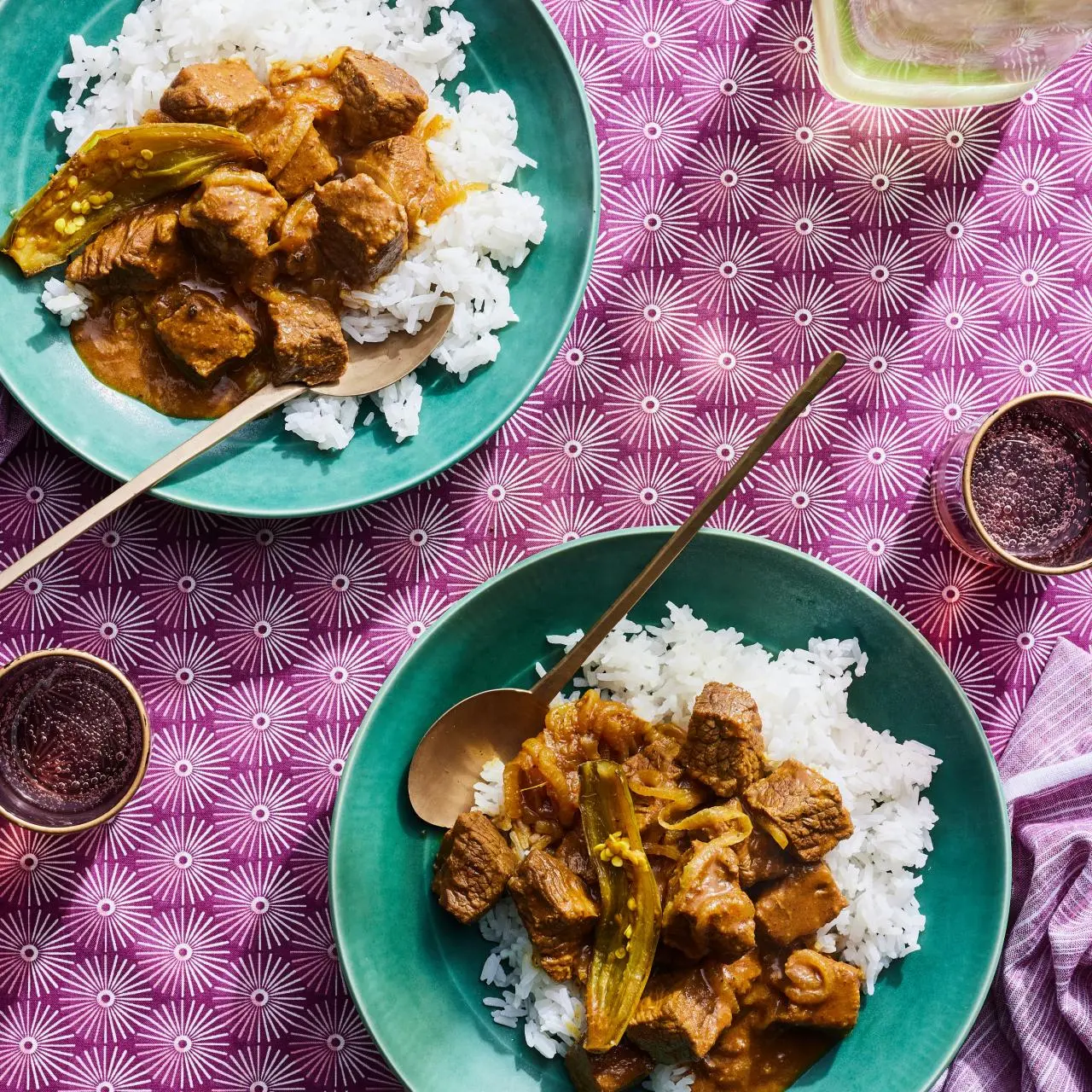
Classic Beef Curry
This version sits closest to what most British households and curry houses mean by "beef curry": a tomato-based, deeply spiced gravy that works equally well with rice or naan. Every regional variation above can be built from this same base method with different spice blends and liquids swapped in.
Ingredients
Serves 6.
- 900g beef chuck or shin, cut into 3-4cm chunks
- 2 tbsp vegetable oil
- 2 onions, finely chopped
- 4 garlic cloves, minced
- A thumb-sized piece of ginger, grated
- 2 tbsp curry powder
- 1 tsp ground turmeric
- 1 tsp chilli powder, or to taste
- 400g tin chopped tomatoes
- 400ml beef stock
- 200ml coconut milk (optional, for a creamier curry)
- Salt, to taste
- Fresh coriander, to serve
Equipment
- Large heavy-based pot or casserole dish
- Wooden spoon
- Chopping board and knife
Method
1. Brown the beef. Heat the oil in a large heavy pot over high heat. Brown the beef in batches - don't crowd the pot, or it will steam instead of browning - then set aside.
2. Cook the onions. Reduce the heat to medium and cook the onions for about 10 minutes until soft and golden.
3. Add the aromatics and spices. Stir in the garlic and ginger and cook for 1 minute until fragrant, then add the curry powder, turmeric and chilli powder and cook for a further minute, stirring constantly, to bloom the spices in the oil.
4. Simmer. Return the beef to the pot along with the chopped tomatoes and beef stock. Bring to a simmer, then cover and cook on low heat for 2-2.5 hours, stirring occasionally, until the beef is fork-tender.
5. Finish. Stir in the coconut milk if using, and simmer uncovered for a further 10 minutes to thicken the sauce. Season to taste with salt, scatter over fresh coriander, and serve with rice or naan.
Slow Cooker and Pressure Cooker Adaptations
Slow Cooker
Brown the beef and sauté the onions, garlic and spices in a pan first - this step matters for flavour and shouldn't be skipped even though the slow cooker will happily cook raw meat. Transfer everything to the slow cooker, add the liquid, and cook on low for 6-8 hours or high for 4-5 hours. Stir occasionally and adjust the seasoning before serving.
Pressure Cooker
Use the sauté function to brown the beef and cook the onions, garlic and spices directly in the pressure cooker. Add the liquid, seal, and cook on high pressure for 30-40 minutes. Release the pressure and check the seasoning - the beef should be tender in a fraction of the time a stovetop or slow cooker version takes.
Troubleshooting
- Sauce is too thin: simmer uncovered for the final 10-15 minutes to reduce it, or mash a few of the softer vegetables into the sauce if using potatoes. A cornstarch slurry (1 tbsp cornstarch mixed with 1 tbsp cold water, stirred in and simmered for a minute) works as a quick fix.
- Beef is still tough after the stated time: it needs longer, not less heat - tough cuts can take anywhere from 2 to 3.5 hours depending on the exact cut and how large the chunks are cut. Keep it at a gentle simmer and check every 20 minutes once you're past the 2-hour mark.
- Too spicy: stir in a splash of coconut milk or plain yoghurt to cool it down, rather than trying to remove the chilli that's already in there.
- Flavour tastes flat: this is almost always under-seasoning or spices that were never properly bloomed - taste right before serving and adjust salt, and make sure step 3 above ran the full minute with the spices actively sizzling in the oil.
Make Ahead, Storing and Freezing
Beef curry is one of those dishes that genuinely improves overnight, as the spices continue to infuse into the meat and sauce - making it a day ahead and reheating gently is a real upgrade, not just a convenience. It keeps for up to 3 days in the fridge, and freezes well for up to 3 months in an airtight container; thaw overnight in the fridge and reheat gently on the stovetop or in the microwave until piping hot throughout.
What to Serve With Beef Curry
Steamed basmati rice or naan are the standard pairings. For a lighter meal, serve it with cauliflower rice or a simple cucumber raita to cool things down alongside the heat.
Frequently Asked Questions
What's the best beef cut for beef curry?
Tougher cuts like chuck, brisket or shin, which become tender after slow cooking. For quicker recipes, more tender cuts like sirloin or flank steak work better, since they don't need the long simmer to break down.
Can I make beef curry in a pressure cooker?
Yes - a pressure cooker significantly reduces cooking time while still achieving tender beef. Cook on high pressure for about 30-40 minutes after browning the meat and aromatics.
How is Japanese curry different from Indian or Thai curry?
Japanese curry is built on a pre-made roux block and is noticeably milder and sweeter. Indian curry typically uses a mix of dried spices with a tomato-based sauce, while Thai curry relies on a fresh or shop-bought curry paste and coconut milk, balancing sweet, spicy, salty and sour flavours more deliberately.
From the mild sweetness of Japanese curry to the coconut-rich warmth of Kerala beef curry and the herbal heat of a Thai version, there's a beef curry style for every palate - and once the base technique of browning, blooming spices and low, slow simmering is second nature, moving between them is just a matter of swapping the spice blend and liquid.
Classic Beef Curry
Ingredients
Method
- Heat the oil in a large heavy pot over high heat. Brown the beef in batches - don't crowd the pot, or it will steam instead of browning - then set aside.
- Reduce the heat to medium and cook the onions for about 10 minutes until soft and golden.
- Stir in the garlic and ginger and cook for 1 minute until fragrant, then add the curry powder, turmeric and chilli powder and cook for a further minute, stirring constantly, to bloom the spices in the oil.
- Return the beef to the pot along with the chopped tomatoes and beef stock. Bring to a simmer, then cover and cook on low heat for 2-2.5 hours, stirring occasionally, until the beef is fork-tender.
- Stir in the coconut milk if using, and simmer uncovered for a further 10 minutes to thicken the sauce. Season to taste with salt, scatter over fresh coriander, and serve with rice or naan.
Leave a Reply