Chilli Salmon Pasta: Three Ways — Creamy, Tomato and Chilli Butter
- Choosing the Right Pasta Shape — It Matters More Than You Think
- The Golden Rule: When to Add the Salmon
- Recipe 1 — Creamy Chilli Salmon Pasta with Crème Fraîche
- Recipe 2 — Chilli Salmon with Cherry Tomato, Capers and White Wine
- Recipe 3 — Chilli Butter Salmon Linguine with Lemon
- Common Mistakes — and How to Fix Them
- Variations and Substitutions Worth Knowing
-
Frequently Asked Questions
- What pasta shape is best for chilli salmon pasta?
- How do you stop salmon going dry in pasta?
- Can you use tinned salmon for chilli salmon pasta?
- Which of the three recipes is best for a dinner party?
- Can you make chilli salmon pasta ahead of time?
- What can I serve alongside chilli salmon pasta?
- Is chilli salmon pasta healthy?
There is a version of chilli salmon pasta that most home cooks have made at some point — a fillet broken up and stirred through whatever sauce was in the fridge, the chilli an afterthought rather than a decision. It is fine. It is also an enormous missed opportunity, because chilli salmon pasta done properly is one of the genuinely great quick weeknight dishes: rich, bold, fragrant, and — crucially — ready in under 25 minutes from a cold pan.
The reason most versions fall short is not the salmon and not the chilli. It is the sauce — specifically, the choice of sauce and, even more specifically, when the salmon is added to it. Get that wrong and you have dry, grey fish in a flat sauce. Get it right and the salmon stays silky, the sauce clings to the pasta, and every mouthful has the right balance of heat, richness, and brightness.
This guide covers three distinct recipes — a creamy crème fraîche sauce, a fresh tomato and chilli, and a punchy chilli butter with lemon — each with its own character, its own ideal pasta shape, and its own technique. All three are ready in under 25 minutes. All three are worth making.
Choosing the Right Pasta Shape — It Matters More Than You Think
The relationship between pasta shape and sauce is one of the most important and most overlooked decisions in home cooking. A sauce does not perform the same way on every pasta shape — it either clings, pools, or slides off depending on the surface area and texture of the pasta. With chilli salmon specifically, where the sauce tends to be either silky-creamy or lightly textured with tomato, the choice of shape directly affects how much flavour hits you in each mouthful.
| Sauce style | Recommended shape | Why it works | Avoid |
|---|---|---|---|
| Creamy (crème fraîche / cream) | Linguine · Tagliatelle · Pappardelle | Flat surfaces hold cream sauces; width gives the salmon flakes room to sit rather than fall away | Penne, rigatoni — cream pools inside the tube rather than coating it |
| Tomato and chilli | Spaghetti · Linguine · Rigatoni | Light tomato sauces cling to spaghetti strands; rigatoni tubes capture the chunky sauce well | Pappardelle — too wide; the light sauce slides off |
| Chilli butter / lemon | Linguine · Spaghetti · Angel hair | Butter-based sauces coat long strands most evenly; angel hair works beautifully with delicate lemon-butter | Short pasta — butter sauces feel lost without long strands to cling to |
The Golden Rule: When to Add the Salmon
This is the single most important technique point in chilli salmon pasta — and the one detail that separates a great result from a disappointing one. Salmon overcooks extraordinarily quickly. Added to a hot sauce too early, it turns dry, grey, and granular within two minutes. Added correctly — in the final 60 to 90 seconds of cooking, off the heat or over the lowest possible flame — it finishes gently in the residual warmth of the sauce, staying silky, blushing pink at the centre, and flaking into large, juicy pieces.
- Cook the pasta until 1 minute short of al dente, then reserve a full mug of starchy pasta water before draining. The starch is essential for binding and glossing the sauce.
- Build the sauce in a wide, heavy pan. Season and taste it before the salmon goes in — it should be slightly more intense than you want in the final dish, because the pasta and salmon will dilute it.
- Add the drained pasta to the sauce and toss over medium heat for 60 seconds, using splashes of pasta water to loosen if needed. This is when the starch does its work.
- Remove the pan from the heat entirely. Add the salmon — either raw chunks or pre-seared flakes depending on the recipe — and fold gently. Do not stir aggressively; large, intact flakes of salmon are the goal.
- Rest for 90 seconds with the lid on. The residual heat finishes the salmon perfectly. Serve immediately.
Recipe 1 — Creamy Chilli Salmon Pasta with Crème Fraîche
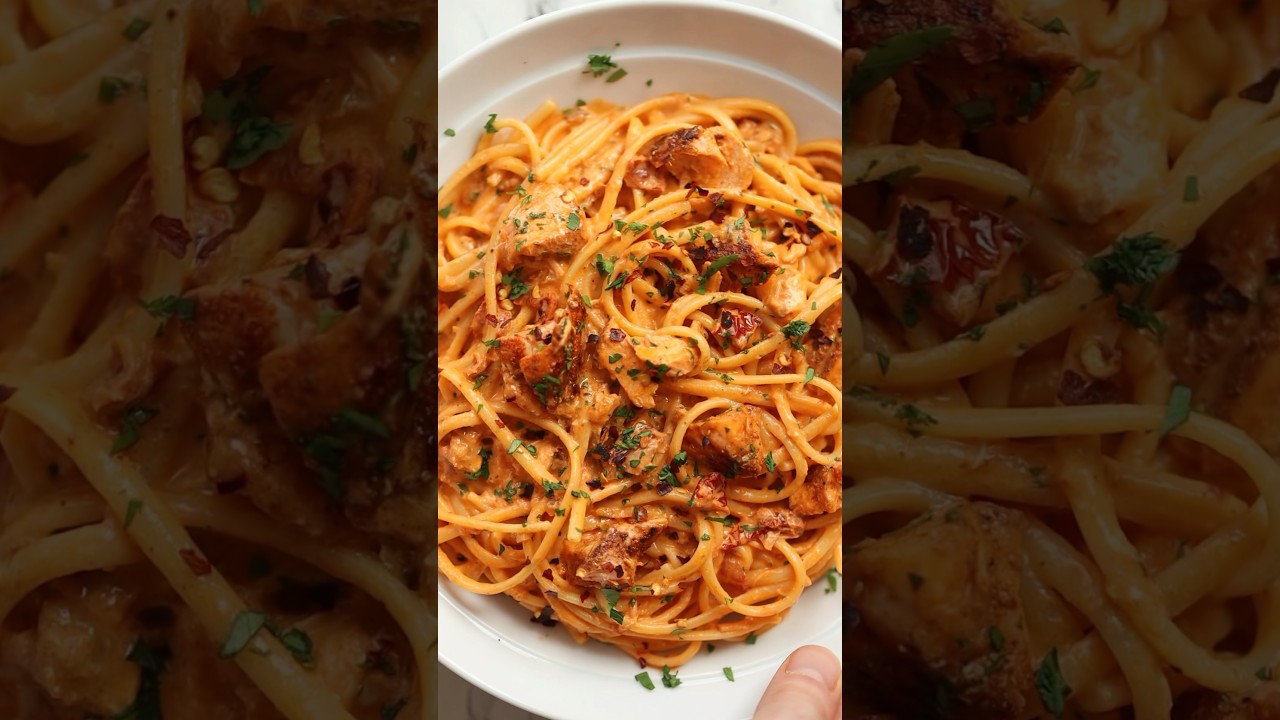
This is the richest and most indulgent of the three — a sauce built around crème fraîche, which is less prone to splitting than double cream and carries a subtle tanginess that keeps the dish from feeling heavy. The heat comes from a combination of fresh red chilli and a pinch of smoked paprika; the freshness from lemon zest stirred in at the end. It is dinner-party worthy but ready in 20 minutes.
- 400g linguine or tagliatelle
- 4 salmon fillets (~550g total), skin removed, cut into 3cm chunks
- 2 tbsp olive oil
- 1 medium onion, finely diced
- 4 garlic cloves, finely sliced
- 2 red chillies, deseeded and finely chopped (keep seeds for more heat)
- ½ tsp smoked paprika
- 200ml full-fat crème fraîche
- Zest of 1 lemon + juice of ½
- Small bunch of flat-leaf parsley, roughly chopped
- Flaky sea salt and black pepper
- Parmesan to serve (optional)
- Cook pasta in well-salted boiling water until 1 minute short of al dente. Reserve 1 mug of pasta water, then drain.
- Meanwhile, heat olive oil in a wide pan over medium heat. Add onion and cook for 5–6 minutes until soft and translucent.
- Add garlic, chilli, and smoked paprika. Cook for 2 minutes, stirring, until fragrant. Do not let the garlic colour.
- Reduce heat to low. Stir in crème fraîche and lemon zest. Season well — the sauce should be slightly over-seasoned at this stage.
- Add drained pasta to the sauce. Toss over low heat for 60 seconds, splashing in pasta water until the sauce coats every strand.
- Remove from heat. Add salmon chunks and fold in gently with a spatula. Cover and rest for 90 seconds.
- Squeeze lemon juice over, scatter parsley, and serve immediately with black pepper and parmesan if using.
Recipe 2 — Chilli Salmon with Cherry Tomato, Capers and White Wine
The lightest and most versatile of the three. A quick tomato sauce built from scratch with cherry tomatoes, garlic, chilli, and a small glass of white wine has a brightness and freshness that a jarred sauce cannot replicate. The capers are non-negotiable — they add a briny, punchy depth that echoes and amplifies the chilli without competing with the salmon. In this recipe the salmon is briefly seared before being flaked into the sauce, which gives the dish a welcome textural contrast.
- 400g spaghetti
- 4 salmon fillets (~550g total), skin on
- 3 tbsp olive oil, divided
- 4 garlic cloves, finely sliced
- 2–3 red chillies, finely sliced (adjust to taste)
- 300g cherry tomatoes, halved
- 100ml dry white wine
- 2 tbsp capers, drained and roughly chopped
- 1 tsp red wine vinegar
- Small bunch of flat-leaf parsley, chopped
- Juice of ½ lemon
- Flaky sea salt and black pepper
- Cook pasta in well-salted boiling water until 1 minute short of al dente. Reserve 1 mug pasta water, drain.
- Season salmon fillets. Heat 1 tbsp oil in a frying pan over high heat. Sear fillets skin-side down for 3 minutes until golden and crisp, then flip and cook 1 minute more. Remove, discard skin, and flake into large pieces. Set aside.
- In a wide pan, heat remaining 2 tbsp oil over medium heat. Add garlic and chilli and cook 2 minutes until fragrant.
- Add cherry tomatoes and cook 3–4 minutes until they begin to collapse and release their juices.
- Pour in white wine. Simmer 3 minutes until alcohol cooks off and sauce reduces slightly. Add capers and red wine vinegar. Season well.
- Add drained pasta to the sauce. Toss over medium heat for 60 seconds, adding pasta water until the sauce is loose and glossy.
- Remove from heat. Fold in flaked salmon gently. Squeeze over lemon juice, scatter parsley, and serve immediately.
Recipe 3 — Chilli Butter Salmon Linguine with Lemon
The most sophisticated and the most deceptively simple of the three. A chilli butter sauce — made by emulsifying good cold butter with pasta water and chilli-infused olive oil — has a glossy, clingy texture that coats every strand of linguine perfectly. The lemon is not a garnish here; it is structural, providing the acidity that stops the butter from feeling heavy. This is the pasta to make when you want to impress with minimal ingredients. It has four principal components: butter, chilli, lemon, salmon. Everything else is optional.
- 400g linguine
- 4 salmon fillets (~550g total), skin removed, cut into 3cm chunks
- 4 tbsp good-quality olive oil
- 3–4 red chillies, finely sliced (or 1 tsp dried chilli flakes)
- 4 garlic cloves, finely grated
- 60g cold unsalted butter, cubed
- Zest and juice of 1 large lemon
- Small bunch of flat-leaf parsley or chives, finely chopped
- Flaky sea salt and white pepper
- Cook pasta in well-salted boiling water until 1 minute short of al dente. Reserve a large mug (300ml) of pasta water, then drain.
- In a wide pan, warm olive oil over low heat. Add chilli and garlic and cook very gently for 3–4 minutes until fragrant and softened but not coloured. The oil should barely shimmer — this is an infusion, not a fry.
- Increase heat to medium. Add drained pasta and 100ml pasta water to the pan. Toss vigorously for 60 seconds.
- Remove from heat. Add cold butter cubes and toss continuously until they melt into a glossy emulsion with the pasta water. Add more pasta water if the sauce tightens too much.
- Fold in salmon chunks and lemon zest. Cover and rest for 90 seconds — the residual heat cooks the salmon through gently.
- Squeeze over lemon juice, scatter herbs, season with white pepper, and serve immediately. No parmesan needed here — the lemon and butter are the flavour.
Common Mistakes — and How to Fix Them
Variations and Substitutions Worth Knowing
Salmon alternatives: Hot-smoked salmon works particularly well in Recipe 2 (tomato and caper) — use it in place of fresh salmon and add it in the final toss without further cooking. Tinned salmon (well-drained) is a credible budget alternative for Recipe 1, though the texture will be softer. For a more substantial dish, use two salmon fillets and supplement with king prawns — the combination works beautifully in all three versions, and follows the same technique logic as our chilli prawn pasta.
Chilli alternatives: Each recipe is built around fresh red chilli, but the character of the heat changes significantly depending on which chilli you use. Dried chilli flakes (especially Calabrian or Aleppo) give a slower, deeper heat that works particularly well in Recipe 1. For a more complex, fruity warmth with vivid colour, Kashmiri chilli powder is an exceptional substitution in Recipe 1 — use ½ teaspoon in place of fresh chilli. For a Mediterranean twist on Recipe 2, harissa paste stirred into the tomato sauce adds depth and smokiness that is worth exploring.
Making it lighter: In Recipe 1, full-fat crème fraîche can be substituted with half-fat crème fraîche or a combination of Greek yoghurt and a tablespoon of olive oil — add it off the heat to prevent splitting. In Recipe 3, reduce the butter to 40g and increase the olive oil slightly for a less rich but equally glossy result.
Storage and meal prep: Chilli salmon pasta is best eaten immediately — salmon in pasta does not reheat well, as the fish dries out significantly in the microwave. However, the sauces (without salmon) can be made 24 hours ahead and refrigerated. On the day, bring the sauce to a simmer, cook fresh pasta, and proceed from step 4 of each recipe. This makes the dish very achievable for a dinner party without last-minute stress.
Frequently Asked Questions
What pasta shape is best for chilli salmon pasta?
For creamy sauces, linguine or tagliatelle are the best choices — their flat surfaces hold cream-based sauces well and give salmon flakes room to settle. For tomato-based chilli salmon, spaghetti or rigatoni work best. For butter-and-lemon versions, linguine or angel hair are ideal. Avoid short pasta like penne with creamy or butter sauces, where the sauce pools inside the tube rather than coating the pasta.
How do you stop salmon going dry in pasta?
The key is timing and heat. Always add the salmon as the very last step, with the pan off the heat or on the lowest possible setting, and fold it in gently rather than stirring. Cover the pan immediately and rest for 90 seconds — the residual heat finishes the salmon perfectly without overcooking it. Raw salmon cut into 3cm chunks added this way will be silky and pink at the centre.
Can you use tinned salmon for chilli salmon pasta?
Yes — tinned salmon (well-drained and with any bones removed) works as a budget-friendly substitute, particularly in Recipe 2 (tomato and caper). The texture will be softer and less distinct than fresh salmon, but the flavour is entirely acceptable. Add it in the final toss rather than off the heat, as it simply needs warming through rather than cooking.
Which of the three recipes is best for a dinner party?
Recipe 1 (creamy crème fraîche) is the most impressive and dinner-party appropriate — it looks luxurious, presents beautifully, and can have the sauce prepared ahead. Recipe 3 (chilli butter) is the most technically elegant and suits guests who appreciate simplicity done well. Recipe 2 is the most casual and crowd-pleasing, and the easiest to scale up for larger groups.
Can you make chilli salmon pasta ahead of time?
The sauces for all three recipes can be made up to 24 hours ahead and refrigerated. The salmon and pasta should always be cooked fresh on the day — pasta held in sauce overnight loses its texture, and pre-cooked salmon reheated in sauce dries out. For meal prep, cook the pasta and salmon fresh and combine with the pre-made sauce just before serving.
What can I serve alongside chilli salmon pasta?
Chilli salmon pasta is a complete meal on its own, but a simple green salad with a sharp lemon dressing, or a bowl of wilted spinach with olive oil, provides welcome freshness alongside the richness of the sauce. Garlic bread works well with Recipes 1 and 2 but can make Recipe 3 feel heavy — opt for plain sourdough alongside the butter version. For a full guide to what complements chilli salmon in different preparations, see our article on what to serve with chilli salmon.
Is chilli salmon pasta healthy?
Salmon is one of the most nutritious proteins available — rich in omega-3 fatty acids, high in protein, and an excellent source of vitamins B12 and D. Recipe 2 (tomato and caper) is the lightest option at approximately 520–560 kcal per serving. Recipe 3 (chilli butter) is the most moderate at around 580–620 kcal. Recipe 1 (creamy crème fraîche) is the richest at approximately 650–700 kcal per serving, though substituting half-fat crème fraîche reduces this considerably.
Leave a Reply