Mary Berry's Cottage Pie: The Complete Guide to a Classic Bake

Cottage pie is the dish British comfort food was built around: a rich, savoury minced beef filling under a blanket of buttery mashed potato, baked until the top turns golden and slightly crisp at the edges. It's the kind of meal that needs no introduction at a family table, and it rewards a little technique far more than it rewards a long ingredient list.
What Is Cottage Pie?
Cottage pie is a baked dish of minced beef in a thickened gravy, topped with mashed potato instead of pastry. It's distinct from shepherd's pie, which uses minced lamb — a distinction that dates back to when "cottage" referred to the humble dwellings where beef, as the more affordable meat of the two in some regions, was the everyday choice, while lamb-based versions took the "shepherd's" name.
A Short History
The dish traces back to late 18th-century Britain, when potatoes were becoming an affordable staple for rural households. "Cottage pie" first appeared in print in 1791, describing a pie with a potato crust used to stretch cheaper cuts of meat further. It was, in essence, frugal cooking — using mash as an economical substitute for a pastry lid. Over the following two centuries it became one of the most recognisable dishes in British home cooking, standard on pub menus and school dinners alike.
Why Cottage Pies Go Watery or Bland (And How to Avoid It)
The two most common complaints about homemade cottage pie are a filling that turns watery once baked, and a filling that tastes flat despite plenty of meat. Both come down to the same few steps:
- Don't skip the reduction. The filling needs to simmer uncovered for at least 20–25 minutes so the liquid reduces into a proper gravy, not a thin soup. If it's still loose after simmering, it will only get wetter as it bakes and the potato topping traps the steam.
- Brown the mince properly first. Frying the beef in batches until it's genuinely browned (not just grey) builds the fond that gives the gravy its depth — rushing this step is the single biggest cause of a bland filling.
- Use tomato purée and Worcestershire sauce together. The purée adds body and a touch of acidity; the Worcestershire sauce adds the savoury, umami backbone that stock alone doesn't provide.
- Let the filling cool slightly before topping with mash. A piping-hot filling will start to melt the potato layer from underneath, and the two can end up merging into a soggy middle layer instead of staying distinct.
Ingredients
For the filling (serves 6):
- 2 tbsp olive oil
- 1 kg minced beef (5–10% fat works best for flavour)
- 1 large onion, finely diced
- 2 carrots, finely diced
- 2 celery sticks, finely diced
- 2 garlic cloves, crushed
- 2 tbsp tomato purée
- 2 tbsp plain flour
- 300ml beef stock
- 150ml red wine (optional — substitute with extra stock if preferred)
- 2 tbsp Worcestershire sauce
- 2 bay leaves
- 1 tsp fresh or dried thyme
- Salt and black pepper, to taste
For the mash topping:
- 1.2 kg floury potatoes (Maris Piper or King Edward), peeled and quartered
- 75g butter
- 100ml warm milk
- 50g mature cheddar, grated (optional, for the top)
- Salt and white pepper, to taste
Equipment
- Large frying pan or sauté pan
- Large saucepan for the potatoes
- Potato masher or ricer
- Ovenproof baking dish (approx. 2–2.5 litre capacity)
- Fork, for texturing the top
Method
1. Make the filling
Heat the oil in a large pan over high heat. Brown the mince in two or three batches so it fries rather than stews, then set aside. In the same pan, soften the onion, carrot and celery for 6–8 minutes, then add the garlic and cook for a further minute.
2. Build the gravy
Return the beef to the pan. Stir in the tomato purée and flour and cook for 1–2 minutes to lose the raw flour taste. Gradually add the stock and wine (if using), stirring to avoid lumps, then add the Worcestershire sauce, bay leaves and thyme. Bring to a simmer, then reduce the heat and cook uncovered for 20–25 minutes, stirring occasionally, until thickened and rich. Season to taste and remove the bay leaves.
3. Make the mash
While the filling simmers, boil the potatoes in salted water for 15–18 minutes until completely tender. Drain well and let them steam-dry for a minute, then mash thoroughly with the butter and warm milk until smooth. Season with salt and white pepper.
4. Assemble
Preheat the oven to 200°C (180°C fan). Let the filling cool for 5–10 minutes, then spoon it into the baking dish. Spread the mash evenly over the top, right to the edges to seal in the filling, then rough up the surface with a fork — this is what gives the top its crisp, golden texture once baked. Scatter over the grated cheese, if using.
5. Bake
Bake for 25–30 minutes, until the top is golden brown and the filling is bubbling at the edges. Rest for 5 minutes before serving.
Troubleshooting FAQ
Why did my cottage pie turn out watery?
The filling almost certainly wasn't reduced enough before it went in the dish. It should be thick enough to hold its shape on a spoon, not runny. If you're short on time next attempt, stir in a cornflour slurry (1 tsp cornflour mixed with a little cold water) during the last few minutes of simmering to thicken it further.
Why did my mash sink into the filling?
Either the filling was too hot when the mash went on top, or the mash itself was too loose. Let the filling cool slightly first, and make sure the mash is stiff enough to hold a peak, not pourable.
Can I use a piping bag instead of spreading the mash?
Yes — for a neater, more professional finish, pipe the mash in rows or rosettes using a large star nozzle. It also browns more evenly, since the ridges catch more colour in the oven.
Variations
- Shepherd's pie: Swap the minced beef for minced lamb — technically a different dish, but the method is identical.
- Cheese-topped: Mix grated cheddar directly into the mash, not just on top, for a richer topping.
- Root vegetable mash: Replace a third of the potato with mashed swede or parsnip for a slightly sweeter, lower-carb topping.
- Gluten-free: Use cornflour instead of plain flour to thicken the filling, and check your stock and Worcestershire sauce are gluten-free.
- Extra vegetables: Stir frozen peas or sweetcorn into the filling in the last 5 minutes of simmering for extra colour and nutrition.
Make Ahead, Storing, and Freezing
Make ahead: Assemble the full pie up to a day in advance and keep covered in the fridge; bake straight from the fridge, adding 10–15 minutes to the cooking time.
Storing: Leftovers keep in the fridge for up to 3 days in an airtight container; reheat in the oven at 180°C until piping hot throughout.
Freezing: Cottage pie freezes very well, either whole or in individual portions. Cool completely, wrap tightly in cling film and foil, and freeze for up to 3 months. Defrost overnight in the fridge before reheating, or bake from frozen at 180°C for about an hour, covering with foil for the first half to stop the top from over-browning.
Serving Suggestions
Cottage pie is a complete meal on its own, but it pairs well with simple steamed greens like peas, green beans or buttered cabbage to cut through the richness. A splash of extra Worcestershire sauce or a spoonful of tangy chutney on the side is a classic pub-style finishing touch.
FAQ
Is cottage pie gluten-free?
Not by default, since the filling is usually thickened with plain flour — but it's easy to make gluten-free by swapping in cornflour and checking your stock and Worcestershire sauce are labelled gluten-free.
Can I freeze cottage pie?
Yes. Let it cool completely before wrapping tightly and freezing for up to 3 months. Defrost overnight in the fridge, or bake from frozen at a slightly lower temperature, covered, for about an hour.
What's the difference between cottage pie and shepherd's pie?
Cottage pie is made with minced beef; shepherd's pie is made with minced lamb. The method and mashed potato topping are otherwise the same.
Can I make it without wine?
Yes — simply replace the red wine with extra beef stock. The wine adds depth but isn't essential to the dish.
Cottage pie earns its place as a British classic by being genuinely simple to get right once you understand the two things that matter most: a properly reduced filling and a stiff enough mash to hold its shape. Master those, and it's a dish you'll come back to on repeat.
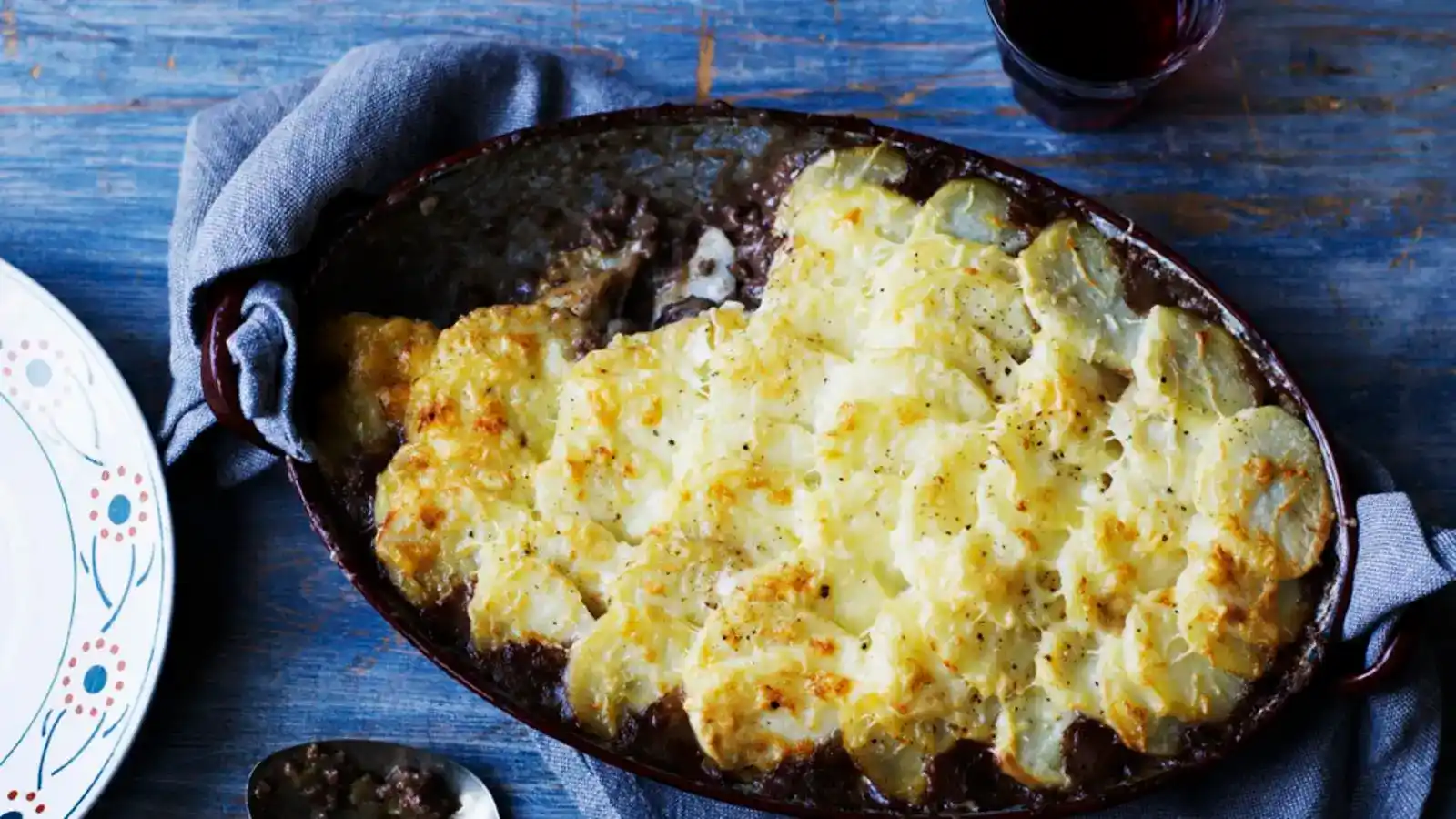
Mary Berry's Cottage Pie
Ingredients
Method
- Heat the oil in a large pan over high heat. Brown the mince in two or three batches so it fries rather than stews, then set aside. In the same pan, soften the onion, carrot and celery for 6-8 minutes, then add the garlic and cook for a further minute.
- Return the beef to the pan. Stir in the tomato purée and flour and cook for 1-2 minutes. Gradually add the stock and wine, stirring to avoid lumps, then add the Worcestershire sauce, bay leaves and thyme. Simmer uncovered for 20-25 minutes until thickened and rich. Season to taste and remove the bay leaves.
- While the filling simmers, boil the potatoes in salted water for 15-18 minutes until tender. Drain well, then mash thoroughly with the butter and warm milk until smooth. Season with salt and white pepper.
- Preheat the oven to 200°C (180°C fan). Let the filling cool for 5-10 minutes, then spoon it into a baking dish. Spread the mash evenly over the top, right to the edges, then rough up the surface with a fork. Scatter over the grated cheese, if using.
- Bake for 25-30 minutes, until the top is golden brown and the filling is bubbling at the edges. Rest for 5 minutes before serving.
Leave a Reply