Steak Pie: The Complete Guide to a Rich, Slow-Braised British Classic
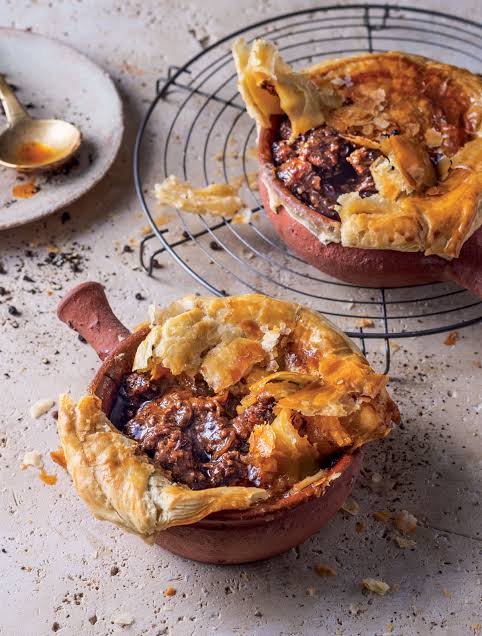
A great steak pie is built on patience rather than technique: cheap, tough cuts of beef, slow-braised until meltingly tender in a deep, savoury gravy, then wrapped in pastry so good it can stand up to the richness underneath. It's a dish that rewards a slow Sunday more than a rushed weeknight, and it's worth every minute.
A brief history
Steak pie has a long pedigree in British cooking, closely tied to steak and kidney pie, its even older and more traditional cousin. Both dishes grew out of the same practical logic that shaped most historic British pies: tough, inexpensive cuts of meat, unsuitable for quick cooking, became tender and flavourful with hours of slow braising, and pastry turned the result into a complete, portable meal that kept well. Steak pie without kidney became the more popular modern version as tastes shifted, though the technique — long, slow braising before the pastry ever goes near an oven — hasn't changed.
Choosing the right cut of beef
This matters more than almost any other decision in the recipe. Look for well-marbled braising cuts: shin, chuck, or braising steak are ideal, all cuts with plenty of connective tissue that breaks down into rich gelatine over a long, slow cook, giving the gravy body as well as tenderising the meat itself. A lean, "quick-cooking" cut like sirloin or rump will simply turn dry and chewy under the same long braise — the toughness of the right cut is exactly what makes it work.
Ingredients (serves 4-6)
- 1kg braising steak (shin, chuck or blade), cut into large chunks
- 2 tbsp plain flour, seasoned
- 2 tbsp vegetable oil
- 1 large onion, diced
- 2 carrots, diced
- 2 celery sticks, diced
- 2 garlic cloves, crushed
- 2 tbsp tomato purée
- 500ml beef stock
- 250ml stout or red wine
- 2 bay leaves
- 1 tbsp Worcestershire sauce
- 500g puff pastry
- 1 egg, beaten, for glazing
- Salt and black pepper
Method
1. Brown the beef
Toss the beef chunks in the seasoned flour. Heat the oil in a large casserole and brown the beef in batches over high heat — don't crowd the pan, or the meat will steam rather than sear, missing out on flavour. Set the browned beef aside.
2. Build the braise
In the same pan, cook the onion, carrot and celery for 8-10 minutes until softened, then add the garlic and tomato purée and cook for 1 minute more. Return the beef to the pan, then add the stock, stout or wine, bay leaves and Worcestershire sauce. Bring to a simmer.
3. Slow braise
Cover and cook low and slow — either in the oven at 150°C (130°C fan) or on the hob at a bare simmer — for 2.5 to 3 hours, until the beef is completely tender and falls apart easily with a fork. Check the seasoning and adjust; if the sauce is too thin, simmer uncovered for the last 20-30 minutes to reduce and thicken.
4. Cool, assemble and bake
Leave the filling to cool completely (or overnight in the fridge) — this is essential, since hot filling under puff pastry causes the butter in the pastry to melt before it can puff properly. Transfer to a pie dish, top with rolled puff pastry, trim and crimp the edges, brush with beaten egg, and cut a steam vent. Bake at 200°C (180°C fan) for 25-30 minutes until the pastry is tall, golden and well-risen.
Steak Pie
Ingredients
Method
- Toss the beef in seasoned flour. Brown in batches in hot oil in a large casserole. Set aside.
- Cook the onion, carrot and celery for 8-10 minutes, add garlic and tomato purée, cook 1 minute more. Return the beef, add stock, stout, bay leaves and Worcestershire sauce. Bring to a simmer.
- Cover and cook low and slow at 150°C (130°C fan) for 2.5-3 hours until the beef is fork-tender.
- Cool the filling completely. Transfer to a pie dish, top with puff pastry, trim and crimp, brush with egg, cut a vent. Bake at 200°C (180°C fan) for 25-30 minutes until risen and golden.
Troubleshooting: why didn't my pastry rise properly?
The most common cause is warm or hot filling meeting the pastry — puff pastry relies on layers of cold butter creating steam pockets as it bakes, and if the butter melts before the pastry hits the oven, it won't puff properly. Always cool the filling fully before topping, and keep the pastry itself chilled right up until it goes into the oven.
Variations
Add sliced mushrooms or pearl onions to the braise for extra texture. Swap the stout for red wine, or use half stock and half ale for a slightly lighter but still deeply savoury gravy. For individual pies, divide the cooled filling between small pie dishes or ramekins and top each with its own pastry lid.
Make ahead, storing and freezing
The braised filling actually improves after a day in the fridge, as the flavours continue to develop — make it up to 2 days ahead. Fully assembled, unbaked pies freeze well for up to 3 months; bake from frozen, adding 15-20 extra minutes and covering the top loosely with foil if it browns before the filling is piping hot throughout.
Serving suggestions
Classic pub-style accompaniments work best: mashed potato, buttered peas or seasonal greens, and extra gravy on the side for anyone who wants more.
For more background, see steak pie on Wikipedia. If you enjoyed this recipe, you might also like our mutton chops guide.
Frequently asked questions
Can I use a slow cooker for the braise instead of the oven or hob?
Yes — brown the beef and soften the vegetables in a pan first as described, then transfer everything to a slow cooker and cook on low for 6-8 hours until the beef is tender.
Do I need to add kidney to make it a "proper" steak pie?
No — steak and kidney pie is a specific, related dish, but a beef-only steak pie is entirely traditional and arguably more popular in modern British kitchens today.
Why does my gravy taste thin despite long cooking?
This usually means there wasn't enough reduction time uncovered at the end, or too much liquid was added at the start relative to the size of the braise; simmering uncovered for the final 20-30 minutes concentrates the flavour and thickens the sauce naturally.
Steak pie is one of those dishes where almost all of the actual work happens hours before the pastry is even involved — get the braise right, and the rest more or less takes care of itself.
Leave a Reply