What Is a Truffle and Why Is It So Expensive? The Complete Guide
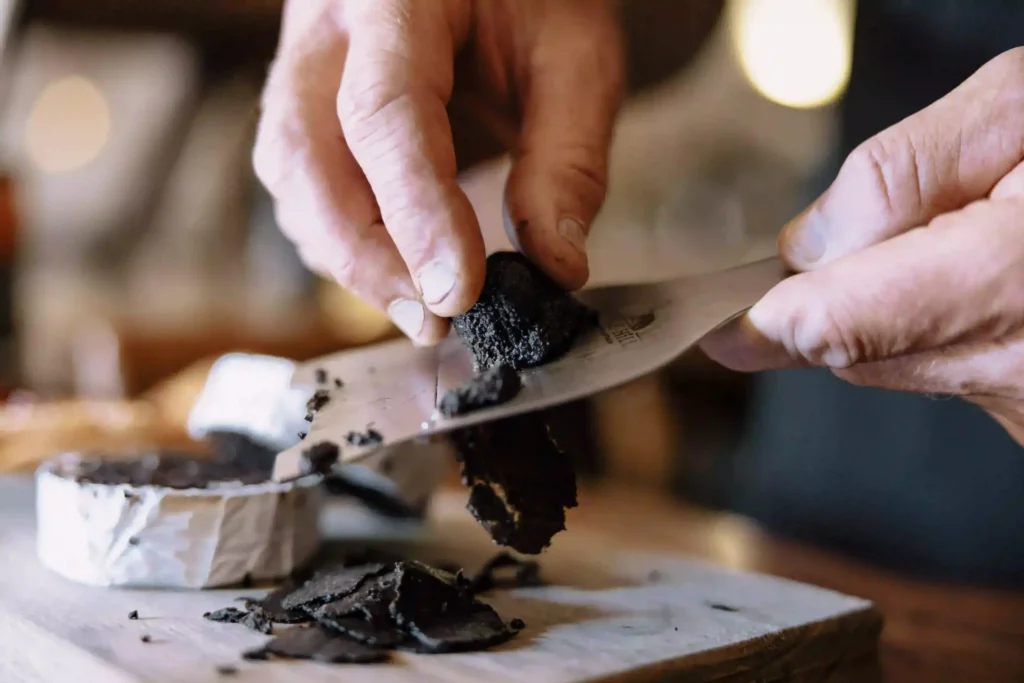
The truffle is, by any measure, one of the most extraordinary ingredients in the culinary world. A knobbly, unprepossessing lump pulled from the earth beneath the roots of oak trees — yet gram for gram, some varieties cost more than gold. Chefs pursue them obsessively. Diners pay extraordinary sums to eat them. And yet most people could not tell you exactly what a truffle is, were it comes from, or why it commands such a staggering price.
This guide answers all of those questions. Whether you are encountering truffles for the first time or looking to deepen your understanding of one of gastronomy's great luxuries, read on.
What Is a Truffle, Exactly?
A truffle is a subterranean fungus — a type of fungi that grows entirely underground, in a symbiotic relationship with the roots of certain trees, most commonly oaks, hazels, beeches, and poplars. Botanically speaking, truffles belong to the genus Tuber, and unlike mushrooms, they never break the surface of the soil. They are, in effect, the fruiting body of an underground fungal network: the part of the organism that produces and disperses spores.
What distinguishes truffles from virtually every other edible fungus is their extraordinary aromatic intensity. A ripe truffle emits a complex, almost overwhelming scent — earthy, musky, faintly garlicky, with notes that have been variously described as sex pheromones, forest floor after rain, aged cheese, and something altogether ineffable. That aroma is not incidental to the truffle's value: it is entirely the point. In the kitchen, truffles are used almost exclusively as an aromatic ingredient, shaved thinly over dishes or infused into oils, butters, and sauces to perfume everything they touch.
The Main Types of Truffle
There are hundreds of Tuber species worldwide, but the culinary world is primarily concerned with a handful of varieties. Understanding the differences between them is essential for anyone serious about cooking with or buying truffles.
| Variety | Latin name | Origin | Season | Approx. price/kg |
|---|---|---|---|---|
| White | Tuber magnatum | Piedmont, Italy (Alba) | Oct – Dec | £3,000 – £7,000+ |
| Périgord black | Tuber melanosporum | France, Spain, Australia | Dec – Mar | £800 – £2,500 |
| Burgundy | Tuber aestivum var. uncinatum | France, Italy, UK | Sep – Jan | £200 – £600 |
| Summer | Tuber aestivum | Europe (inc. UK) | May – Aug | £100 – £350 |
| Chinese | Tuber indicum | China | Nov – Mar | £30 – £120 |
The white truffle — Tuber magnatum — is universally regarded as the most prized. Found primarily in the forests around Alba in Piedmont, northern Italy, it cannot be cultivated and must be hunted by trained dogs (pigs were traditionally used, though they have a tendency to eat what they find). Its season is short, its availability entirely subject to weather and chance, and its aroma so volatile that it begins to fade almost immediately after harvesting. Individual specimens at the Alba White Truffle Auction regularly sell for tens of thousands of pounds.
The Périgord Black Truffle: The Chef's Truffle
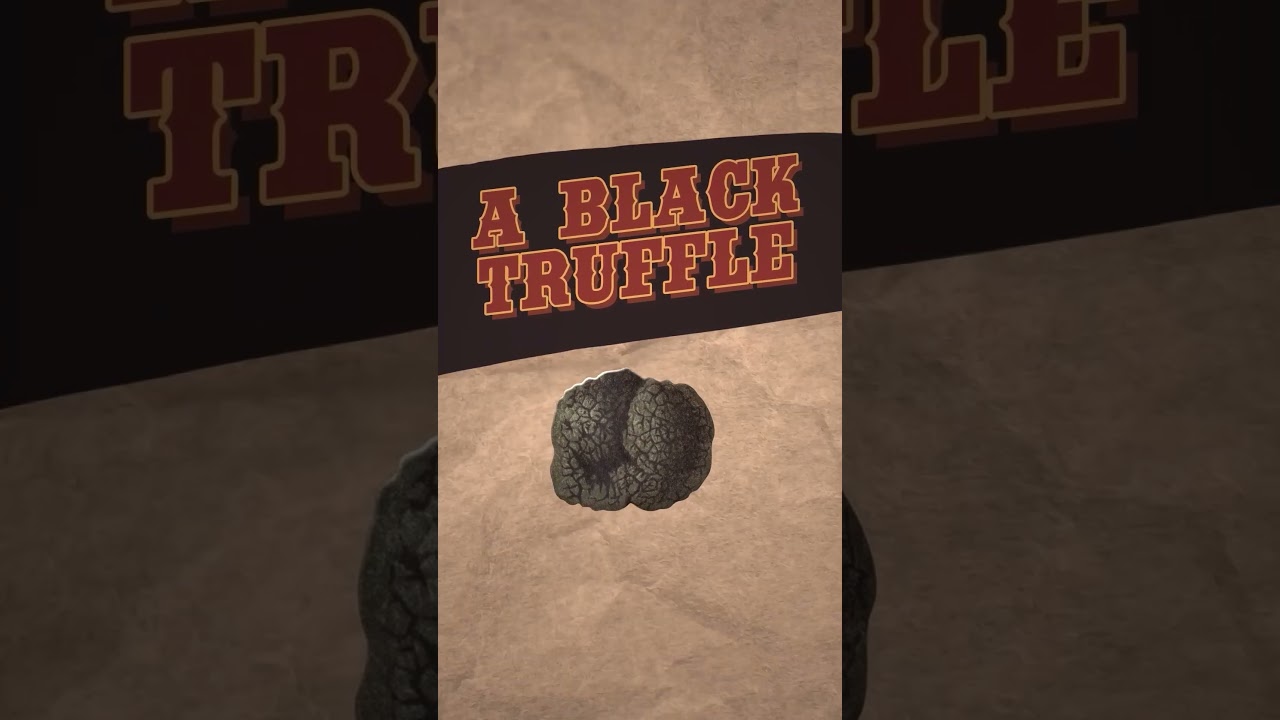
While white truffles command the most spectacular prices, the Périgord black truffle — Tuber melanosporum — is arguably the most important truffle in professional kitchens. Named for the Périgord region of southwest France (though now grown in Spain and Australia as well), it has a longer shelf life than the white truffle, responds beautifully to gentle heat, and pairs naturally with ingredients such as eggs, cream, foie gras, and aged cheeses. It is the truffle of classic French haute cuisine, and the one most likely to appear in your fine dining tasting menu.
Truffles in Britain
Britain has its own truffle tradition, largely forgotten for most of the 20th century but now enjoying a genuine revival. The summer truffle (Tuber aestivum) grows wild in chalky woodlands across southern England, particularly in the Chilterns, the North and South Downs, and parts of Hampshire. A small but passionate community of British truffle hunters has formed around foraging and, increasingly, cultivation — with dedicated truffle orchards now producing viable harvests in Wiltshire, Yorkshire, and Scotland.
For a broader look at Britain's relationship with foraged and wild ingredients, our guide to British food with global roots explores how indigenous ingredients are shaping modern British cuisine.
Why Are Truffles So Expensive? The Real Reasons
The price of truffles is not artifice or marketing. It reflects a genuine convergence of factors that make them almost uniquely difficult to produce and supply at scale.
They Cannot Be Reliably Cultivated
The white truffle (Tuber magnatum) has never been successfully cultivated. Despite decades of research and investment, nobody has managed to reliably grow them outside their native habitat. This means that every white truffle in the world must be found in the wild — an activity dependent on the right combination of soil chemistry, tree species, mycorrhizal health, rainfall, and temperature that no human can fully control or replicate. Even black truffles, which can be cultivated in inoculated orchards, require five to seven years from planting before the first harvest, with no guarantee of success.
The Season Is Brutally Short
White truffles are in season for roughly ten weeks per year. Black Périgord truffles are available from December to March. Once the season ends, there is nothing to be done — quality drops precipitously and prices either collapse or the product disappears from market. This extreme seasonality concentrates demand into a tiny window, driving prices to remarkable heights at peak season.
They Are Highly Perishable
A freshly harvested white truffle begins losing its aroma within days. Properly stored in a sealed container with rice or eggs (which absorb the aroma beautifully — more on this below), a white truffle might last ten days to two weeks before its value degrades significantly. This perishability means that logistics are extraordinarily complex and wastage rates are high, both of which are built into the price.
They Must Be Found by Trained Animals
Because truffles grow underground and emit no visible signal, they must be located by smell. Lagotto Romagnolo dogs are the preferred truffle-hunting breed today — trained from puppyhood to detect the specific volatile compounds that indicate a ripe truffle beneath the soil. A well-trained truffle dog is itself a significant financial investment, and the skills of its handler take years to develop. According to BBC Food, truffle hunters in Italy guard their territories and their dogs with fierce secrecy — the market is intensely competitive.

Climate Change Is Reducing Supply
As summers in southern Europe have grown hotter and drier, truffle harvests have become less predictable and, in many regions, smaller. French black truffle production has declined dramatically since its peak in the early 20th century — from around 2,000 tonnes annually at the turn of the 20th century to fewer than 50 tonnes in recent decades, according to reporting in The Guardian. Reduced supply against sustained or growing demand is the most fundamental driver of price.
How to Use Truffles in Cooking
The cardinal rule of cooking with truffles is restraint. A little goes an enormous way. The flavour is so penetrating that heavy-handed use does not produce a more intense result — it produces an unpleasant, almost medicinal experience. The best truffle dishes are almost always simple ones where the truffle is permitted to be the star.
The Classic Applications
- Shaved raw over pasta or risotto — the most celebrated application. A simple tagliolini with butter and Parmesan, finished with a generous shaving of white truffle, is one of the great dishes on earth.
- Truffle eggs — store a whole truffle with eggs in a sealed container for 48 hours. The shells are porous and the eggs absorb the aroma completely. Scrambled truffle eggs are extraordinary in their simplicity.
- Truffle butter — blend finely grated black truffle with softened high-quality butter and a touch of salt. Store refrigerated or frozen. Transform a steak, a piece of toast, or a bowl of pasta with a single knob.
- Baked in pastry — the classic boeuf en croûte with a layer of black truffle duxelles beneath the pastry is one of the great uses of Tuber melanosporum. For a guide to working with pastry at this level, see our sweet pastry recipe for tarts and pies.
- Infused into cream or sauce — warm cream gently with sliced truffle to extract maximum aroma, then use as the base for a sauce. This technique is particularly effective with black truffles, which release more flavour with gentle heat than white truffles.
A note on truffle oil: Most commercial truffle oil contains no real truffle. The aroma in nearly all truffle oils sold at supermarket prices comes from a synthetic compound — typically 2,4-dithiapentane — that mimics one facet of the truffle's complex aroma but bears little resemblance to the real thing. Many chefs find truffle oil actively unpleasant. If you wish to capture genuine truffle flavour without buying a whole truffle, purchase small quantities of fresh truffle from a reputable specialist and make your own truffle butter or truffle salt. The difference is not subtle.
Truffle Pairings: What Works Best
Truffles have an affinity with ingredients that are rich, fatty, and relatively neutral — vehicles that carry and amplify the aroma rather than compete with it. Eggs, butter, cream, pasta, Parmesan, potatoes, and unctuously cooked meats are natural companions. For drinks, white truffles pair beautifully with mature white Burgundy or aged Champagne. Black truffles find their perfect match in structured Pinot Noir or a well-aged Barolo.
A dish that showcases truffle pairing particularly well is a classic dauphinoise potatoes — the richness of the cream and the starchiness of the potato create an ideal backdrop for shaved black truffle. Similarly, peppercorn sauce demonstrates the power of aromatics in sauce-making — a principle that truffle cookery takes to its logical extreme.
For wine pairings across a wider range of dishes, our guide to the world's finest sparkling wines offers excellent choices to consider alongside a truffle-led meal.
Where to Buy Truffles in the UK
Fresh truffles are available in the UK from a small number of specialist importers and luxury food retailers. Wiltshire Truffles is one of the most reputable domestic suppliers, sourcing both wild British truffles and imported varieties. Fortnum & Mason and Harrods Food Hall carry fresh truffles during the season. TruffleHunter operates a dedicated online platform with an excellent range of fresh and preserved truffle products.
When buying fresh truffle, always smell it before purchasing if possible. A ripe truffle should have an assertive, heady aroma — if it smells of very little, it is either not yet ripe or already past its best. Weight matters too: a good truffle should feel dense and firm, without soft spots.
What is a truffle in cooking?
A truffle is a subterranean fungus of the genus Tuber that grows underground in symbiosis with tree roots. In cooking, it is prized almost exclusively for its extraordinary, penetrating aroma — used shaved, grated, or infused to perfume dishes rather than as a bulk ingredient.
Why are truffles so expensive?
Truffles are expensive because they cannot be reliably cultivated, must be found underground by trained dogs, have an extremely short season, are highly perishable, and are increasingly threatened by the effects of climate change on their growing regions. Supply is inherently limited; demand from fine dining is consistently high.
What is the difference between black and white truffles?
White truffles (Tuber magnatum) are more aromatic, more expensive, and cannot be cultivated — they must be used raw and shaved over finished dishes. Black Périgord truffles (Tuber melanosporum) have a more earthy, intense flavour, can be gently heated, and are suited to incorporation into sauces, butters, and pastry dishes.
Do truffles grow in the UK?
Yes — the summer truffle (Tuber aestivum) grows wild in chalky woodlands across southern England, particularly in the Chilterns, the North Downs, and Hampshire. A small but growing number of dedicated truffle orchards now operate across England and Scotland, producing harvests of both summer and Burgundy truffles.
Is truffle oil the same as real truffle?
No. Almost all commercial truffle oil is made with synthetic flavouring compounds, not real truffle. It mimics one aspect of the truffle's aroma but lacks the complexity of the real ingredient. Many professional chefs avoid it entirely and recommend using small quantities of genuine fresh truffle instead.
When is truffle season in the UK?
British summer truffles are in season from May to August. The finest imported varieties — white Alba truffles from Italy and black Périgord truffles from France — are at their peak from October through to March, making winter the prime season for truffle lovers in the UK.
How do you store fresh truffles at home?
Wrap fresh truffles in clean kitchen paper, place them in a sealed glass jar, and store in the refrigerator. Change the paper daily to prevent moisture build-up. Storing them alongside eggs or raw rice transfers the aroma to those ingredients — an excellent way to extend the truffle's culinary usefulness as it ages.
Leave a Reply